Table of Contents
Breast Cancer Screening Tests: Mammogram, Ultrasound & More Explained

By Prashant Baghel


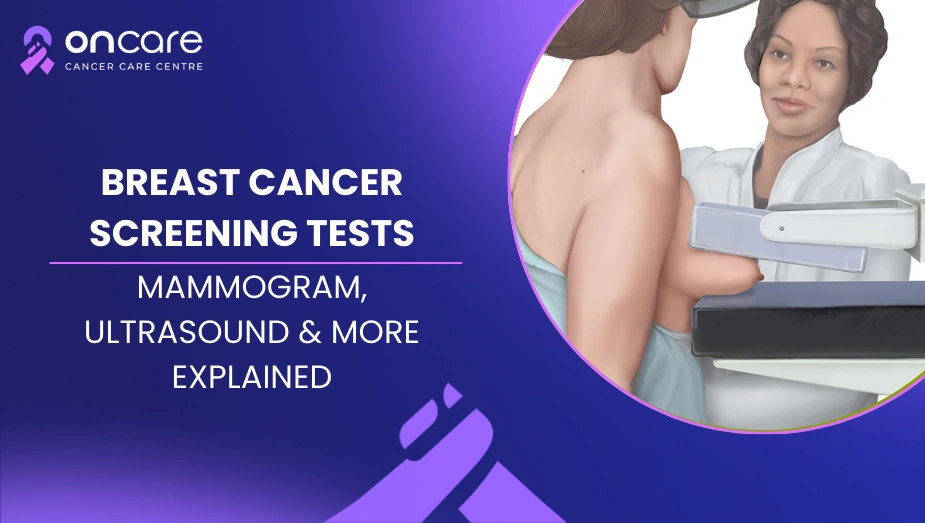
Ever ponder how medical professionals detect breast cancer before a patient even exhibits symptoms? Many women receive a diagnosis during a routine check-up, even though they feel perfectly healthy. That is the early screening's power. Early detection of breast cancer makes treatment simpler, safer, and more effective. You can protect yourself and your loved ones by being aware of the various screening test for breast cancer options available today.
One of the most prevalent cancers in women worldwide is breast cancer. The good news is that there are numerous early detection methods available in modern medicine. Doctors now have a number of tools to assess breast health, including blood tests, ultrasounds, and mammograms. We will cover everything in this article so you can make sense of your options and better understand each screening test for breast cancer.
What Is a Breast Cancer Screening Test?
A breast cancer screening test is a medical procedure used to detect the disease before any symptoms appear. This implies that the test can identify early indicators of cancer even if a woman does not experience any pain, lumps, or changes in her breast. In simple words, a screening test for breast cancer helps find the disease early, when treatment works best.
Diagnostic testing is not the same as screening. Screening is done as a regular check, particularly for women who are at higher risk or who are older. When symptoms like breast pain, nipple discharge, or a lump appear, diagnostic testing is performed.
Since early-stage breast cancer frequently exhibits no symptoms, doctors advise routine screening. Early detection of cancer can save lives and lessen the need for harsh treatments. That is why choosing the right screening test for breast cancer is so important.
The Most Popular Screening Test for Breast Cancer Is the Mammogram
The most popular test for breast cancer screening is a mammogram. It is a unique kind of breast X-ray. To obtain a clear image, the breast is gently pressed between two plates during the test. For a few seconds, the pressure might be uncomfortable, but it shouldn't hurt too much.
Tiny lumps or changes in breast tissue that are too small to feel can be found with a mammogram. Although this may vary based on individual risk and family history, doctors typically advise women to begin routine mammograms around the age of 40. A mammogram remains the gold standard screening test for breast cancer for most women.
Mammograms come in two primary varieties. For women without symptoms, a screening mammogram is performed. If a lump or other abnormality is discovered during a screening test, a diagnostic mammogram is performed.
Breast Ultrasound: A Valuable Supplementary Screening Test for Breast Cancer
Sound waves are used in a breast ultrasound to produce images of the breast's interior. It doesn't use radiation. This test is frequently used when a woman has dense breast tissue or when a mammogram reveals something unclear. In many cases, ultrasound supports the main screening test for breast cancer.
A tiny instrument is passed over the skin while a gel is applied to the breast for the ultrasound. The process typically takes 15 to 30 minutes and is painless.
Doctors can determine whether a lump is solid or filled with fluid by using an ultrasound. Younger women, whose breast tissue is denser and more difficult to examine with a mammogram alone, benefit most from it. While it may not replace a mammogram, it is an important additional screening test for breast cancer in selected cases.
MRI and Other Cutting-Edge Screening Techniques
Doctors may recommend a breast MRI in certain situations. Magnetic Resonance Imaging is referred to as MRI. It produces finely detailed images of the breast using radio waves and powerful magnets.
Women who have a very high risk of breast cancer, such as those with a strong family history or specific genetic abnormalities, are typically advised to have a breast MRI. Because it is more costly and occasionally raises false alarms that necessitate additional testing, it is not a routine screening test for breast cancer for everyone.
The breast cancer blood test name is another new field of study that many people are curious about. Researchers are investigating various blood tests that could aid in the early detection of cancer. These tests search the blood for specific markers, like proteins or pieces of tumor DNA. Many people search online for the exact breast cancer blood test name, hoping for a simple solution.
Is It Possible to Detect Breast Cancer with a Blood Test for Breast Cancer Detection?
Many people look up the breast cancer blood test name and wonder if a basic blood test can detect the disease. As of right now, there isn't a single standard blood test for breast cancer detection that can be used on its own to screen healthy women for breast cancer.
However, in patients who have already received a breast cancer diagnosis, physicians occasionally use blood tests to check tumor markers. One well-known breast cancer blood test name is CA 15-3. Although this blood test for breast cancer detection is not accurate enough for early screening in healthy women, it can be used to track the effectiveness of treatment or determine whether cancer has returned.
In order to improve blood test for breast cancer detection, researchers are developing sophisticated methods that could detect cancer cells or DNA in the blood. Liquid biopsy tests are another name for these advanced approaches. Although encouraging, they are still being researched and cannot yet take the place of mammograms or other imaging procedures as a primary screening test for breast cancer.
Therefore, imaging tests like mammograms continue to be the gold standard screening test for breast cancer.
When and Who Should Get Screened?
Around age 40 or 45, the majority of doctors advise women to begin routine mammograms. The precise age may vary depending on your individual risk factors and national regulations.
Women may need to begin screening earlier if they have a family history of breast cancer, particularly if a mother or sister has the disease. More frequent testing and occasionally additional imaging, such as MRI, may be necessary for people with genetic mutations such as BRCA1 or BRCA2.
Discussing your personal risk with your physician is crucial. They will advise you on how frequently to get tested and when to begin screening. Choosing the right screening test for breast cancer at the right time can greatly improve early detection.
What Takes Place If an Abnormal Screening Test Results?
Unusual results from a screening test do not always indicate cancer. Frequently, the outcome could be a benign breast tissue change or a benign cyst.
Your physician might recommend a biopsy or more imaging tests. During a biopsy, a tiny sample of breast tissue is taken out and viewed under a microscope. There is no other way to determine whether cancer is present.
It can be stressful to wait for results, but keep in mind that many abnormal findings are not cancerous. Early follow-up enables physicians to act promptly when necessary after a screening test for breast cancer.
Consult Today
Although breast cancer can be frightening, knowledge empowers you. Making informed decisions about your health is made easier when you are aware of the various screening test for breast cancer options, such as mammograms, MRIs, ultrasounds, and even the most recent research on the breast cancer blood test name and blood test for breast cancer detection.
Imaging tests continue to be the most reliable approach for early diagnosis, even though research on blood tests for breast cancer detection is ongoing. Simple actions like knowing your family history, having an honest conversation with your doctor, and getting regular checkups can save lives.
Getting the right treatment at the right place is crucial if you or a loved one has been diagnosed with breast cancer. You can rely on Oncare Cancer Hospital for the best care and direction if you want skilled treatment, cutting-edge technology, and sympathetic support.
Frequently Asked Questions
A mammogram is the most effective and widely used screening test for breast cancer. Even before symptoms show up, it can identify cancer early.
As of right now, there is no single breast cancer blood test name approved as a routine screening test for breast cancer. Some blood tests for breast cancer detection, such as CA 15-3, are mainly used to monitor patients who already have breast cancer.
Starting around age 40, most women are recommended to have a mammogram every one to two years; however, it is best to heed your doctor's advice.
Indeed, early screening may be necessary for young women with high-risk factors, such as family history. Depending on the situation, doctors may suggest an MRI or ultrasound in addition to mammograms as part of a screening test for breast cancer.
Book an Appointment
Related Blogs
Stage 4 Breast Cancer Symptoms: Full Body Signs & Advanced Indicators
Learn the full-body symptoms of stage 4 breast cancer, including bone pain, shortness of breath, fatigue, and signs of advanced metastasis and its full-body signs!

Is a Cure Possible for Breast Cancer Metastatic to the Liver?
Breast cancer that has spread to the liver is usually not curable, but modern treatments can control the disease and help patients live longer with a good quality of life.

Is Heel Pain a Sign of Breast Cancer?
Heel pain is common and usually caused by foot problems, not breast cancer. Learn the real causes of heel pain, rare cancer links, and when to see a doctor.

Is Chemotherapy Treatment Painful for Breast Cancer?
Many people fear chemotherapy pain in breast cancer. Learn whether chemotherapy really hurts, what discomfort may occur, and how doctors manage pain during treatment.