Table of Contents
Routine Cancer Screening Tests: Age-Wise Recommendations Explained

By Prashant Baghel


A lot of people think they are healthy and don't need to get tested. But cancer often grows without pain or clear warning signs. The disease may already be in an advanced stage by the time symptoms show up. This is why it's so important to get routine cancer screening tests. These tests help doctors find cancer early, sometimes even before the person gets sick. Finding something early makes it easier, cheaper, and more likely to work.
People of all ages should get routine cancer screening tests. Age, gender, lifestyle, and family history are all things that can help you decide which routine cancer screening tests to get. Knowing what tests are needed at what age can help you keep yourself and your loved ones healthy. We will talk about routine cancer screening tests in very simple terms and make sure you understand the recommendations for each age group.
What are the tests that are done regularly to check for cancer?
Routine cancer screening tests are medical tests that look for cancer before any symptoms show up. People take these routine cancer screening tests when they feel fine and healthy. The main goal is to find cancer early on through routine cancer screening tests.
It is often easier to treat cancer when it is found early. In a lot of cases, getting treatment early makes people live longer and better. Routine cancer screening tests can also find changes that could lead to cancer. This means that doctors can fix the problem before it becomes cancer.
There are different types of routine cancer screening tests for different types of cancer, like breast cancer, cervical cancer, colon cancer, prostate cancer, and lung cancer. Age and risk factors are the most important things to think about when choosing the right routine cancer screening tests.
Routine Cancer Screening Tests for People in Their 20s and 30s
You might feel young and strong in your 20s and 30s, but this is the best time to start doing some basic routine cancer screening tests. Cervical cancer screening is very important for women. A Pap test is one of the important routine cancer screening tests that can find cells in the cervix that are not normal and could turn into cancer later. Most doctors say that people should start this test in their early 20s.
Women should also do regular breast self-exams and see their doctor for clinical breast exams as part of their routine cancer screening tests plan. Breast cancer is more common after age 40, but it's still good to know about it early on.
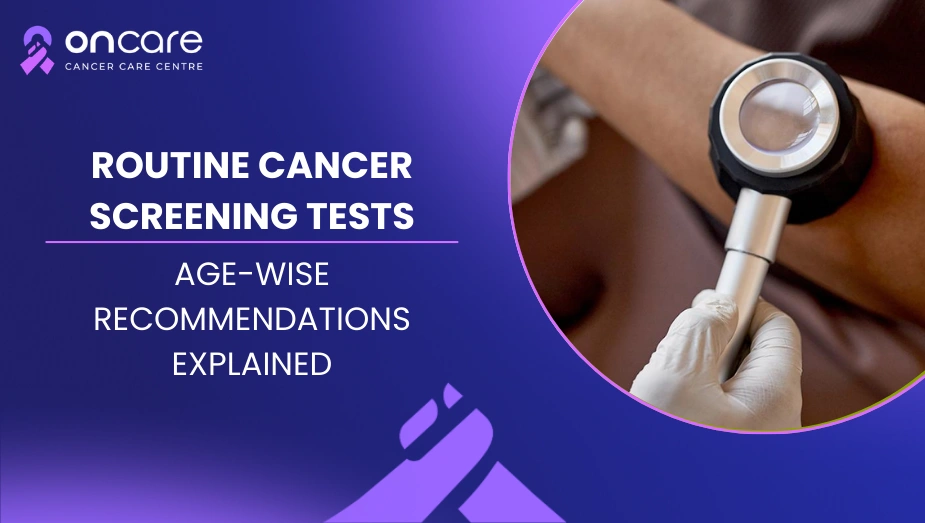
Doctors may suggest skin exams for men and women in this age group, especially if they have a family history of skin cancer or have spent a lot of time in the sun. At this age, routine cancer screening tests are mostly about stopping the disease and catching it early.
Cervical Cancer Screening in 20s and 30s
Cervical cancer screening in your 20s and 30s is crucial. Pap tests detect abnormal cells early, which allows doctors to prevent cancer before it develops.
Breast Health and Self-Exams
Regular breast self-exams and clinical exams help women become familiar with their breast tissue. Early detection of lumps can save lives.
Skin Exams and Prevention
Skin exams in this age group are recommended for those with high sun exposure or family history. Detecting skin changes early helps prevent serious conditions.
Routine Cancer Screening Tests for People in Their 40s
Your 40s are a very important time to keep an eye on your health. During this time, routine cancer screening tests happen more often. It is common for women to be told to start getting mammograms around the age of 40. A mammogram is one of the key routine cancer screening tests and is an X-ray of the breast that can find small lumps before they can be felt.
According to doctors, cervical cancer screening should still happen in this age group as part of routine cancer screening tests. Some women may also get tested for HPV along with the Pap test.
Doctors may start talking to men and women about getting screened for colon cancer in their mid to late 40s. One of the most common routine cancer screening tests is a colonoscopy, which helps find colon cancer early.
If you have a lot of cancer in your family, you may need to get routine cancer screening tests sooner or more often.
Cancer Screening Tests You Should Get in Your 50s and 60s
Routine cancer screening tests are even more important when you are in your 50s and 60s. Starting at age 45 or 50, depending on guidelines and personal risk, it is highly recommended that people get screened for colon cancer. A colonoscopy is one of the major routine cancer screening tests that can find and remove small growths before they turn into cancer.
Women should keep getting regular mammograms to check for breast cancer as part of their routine cancer screening tests schedule. Depending on previous results, cervical cancer screening may continue until about age 65.
Men may want to talk to their doctor about getting screened for prostate cancer. A simple blood test called PSA is included in some routine cancer screening tests plans and can help find early signs of prostate cancer. But whether or not to take this test is up to the person's risk and the doctor's advice.
People over 50 who have a history of heavy smoking may also be told to get screened for lung cancer. Low-dose CT scans are part of routine cancer screening tests for people who are at high risk.
Routine Cancer Screening Tests for People Over 70
After the age of 70, routine cancer screening tests depend on how healthy you are and how long you are likely to live. If the person is healthy and active, some routine cancer screening tests may still happen. For instance, some women may still be told to get screened for breast cancer.
If past tests were normal, colon cancer screening may stop after a certain age. If past results have been clear, cervical cancer screening usually stops after 65 as part of adjusted routine cancer screening tests guidelines.
At this point, doctors are focused on giving each patient the best care possible. Routine cancer screening tests should only be done if the benefits outweigh the risks. It's very important to see the doctor regularly and talk to them about your health and your need for routine cancer screening tests.
Why Age-Wise Recommendations Are Important
Research and medical studies have led to age-based recommendations for routine cancer screening tests. At different ages, some types of cancer are more common than others. For instance, cervical cancer screening starts early because it can happen to younger women. Screening starts later because breast and colon cancer are more common in middle age.
Routine cancer screening tests based on age help lower the risk of a late diagnosis. It makes sure that cancer is found at the right time through proper routine cancer screening tests. Not getting the tests that are suggested can make it harder to get a diagnosis and treatment.
It's also important to know that your way of life has a big impact. Cancer risk can go up if you smoke, eat poorly, don't exercise, are overweight, or have a family history of the disease. People who are more likely to get cancer may need to get their routine cancer screening tests done sooner or more often.
The mental and financial benefits of getting screened early
Routine cancer screening tests not only save lives, but they also help people feel less stressed. When cancer is found early through routine cancer screening tests, it is often easier to treat and people get better faster. This makes patients and their families less scared and anxious.
Usually, treating cancer in its early stages is less expensive than treating it in its later stages. In later stages, hospital stays, surgeries, and complicated treatments can be expensive. Routine cancer screening tests are a way to invest in your health in the future.
Routine cancer screening tests also make you feel better. Taking care of your health makes you feel good and confident.
Consult Today
One of the best ways to fight cancer is to get routine cancer screening tests. They can help find cancer early, even before symptoms show up. Age-based recommendations tell us when to start these routine cancer screening tests and how often to do them again.
There are specific routine cancer screening tests that you should get at different times in your life. For example, you should get cervical cancer screening in your 20s and mammograms and colonoscopies in your 40s and 50s as part of your routine cancer screening tests plan. Following these rules can save lives, lower the cost of treatment, and make life better.
Don't forget about your health. It really does make a difference to find things early. Choose Oncare Cancer Hospital for expert advice, advanced screening, and the best cancer treatment with caring staff. You can protect your future by taking the right step today.
Frequently Asked Questions
Routine cancer screening tests are medical tests that look for cancer before any symptoms show up.
Some routine cancer screening tests, like cervical screening, start when you are in your early 20s, while others start when you are in your 40s or 50s.
Most routine cancer screening tests are easy to do and don't hurt much, if at all.
How often you need to do routine cancer screening tests depends on your age, risk factors, and what your doctor says. It's important to meet with them regularly.
Book an Appointment
Related Blogs
Basic Cancer Screening Tests for Adults: A Preventive Health Guide
Learn about basic cancer screening tests for adults. Trust Oncare Cancer Hospital for early detection, expert guidance, and the best cancer care available.
LDCT Lung Cancer Screening: Benefits, Risks & Eligibility Criteria
Learn about LDCT lung cancer screening for high-risk individuals. Oncare Cancer Hospital provides expert early detection, care, and advanced lung imaging services.
Female Cancer Screening: Essential Tests Every Woman Should Know
Learn about female cancer screening tests like mammograms, PAP, HPV test, and cancer profile packages. Get early detection and expert care at Oncare Hospital.
What is an HRC Test and Why is It Important for Cancer Screening?
Detect cancer early with the HRC blood test. Non-invasive, reliable, and affordable in India and Delhi. Book your HRC test at Oncare Cancer Hospital today.