Table of Contents
Returning to Work After Cancer Treatment: A Practical Guide for Indian Professionals

By Dr. Gajendra Kumar Himanshu


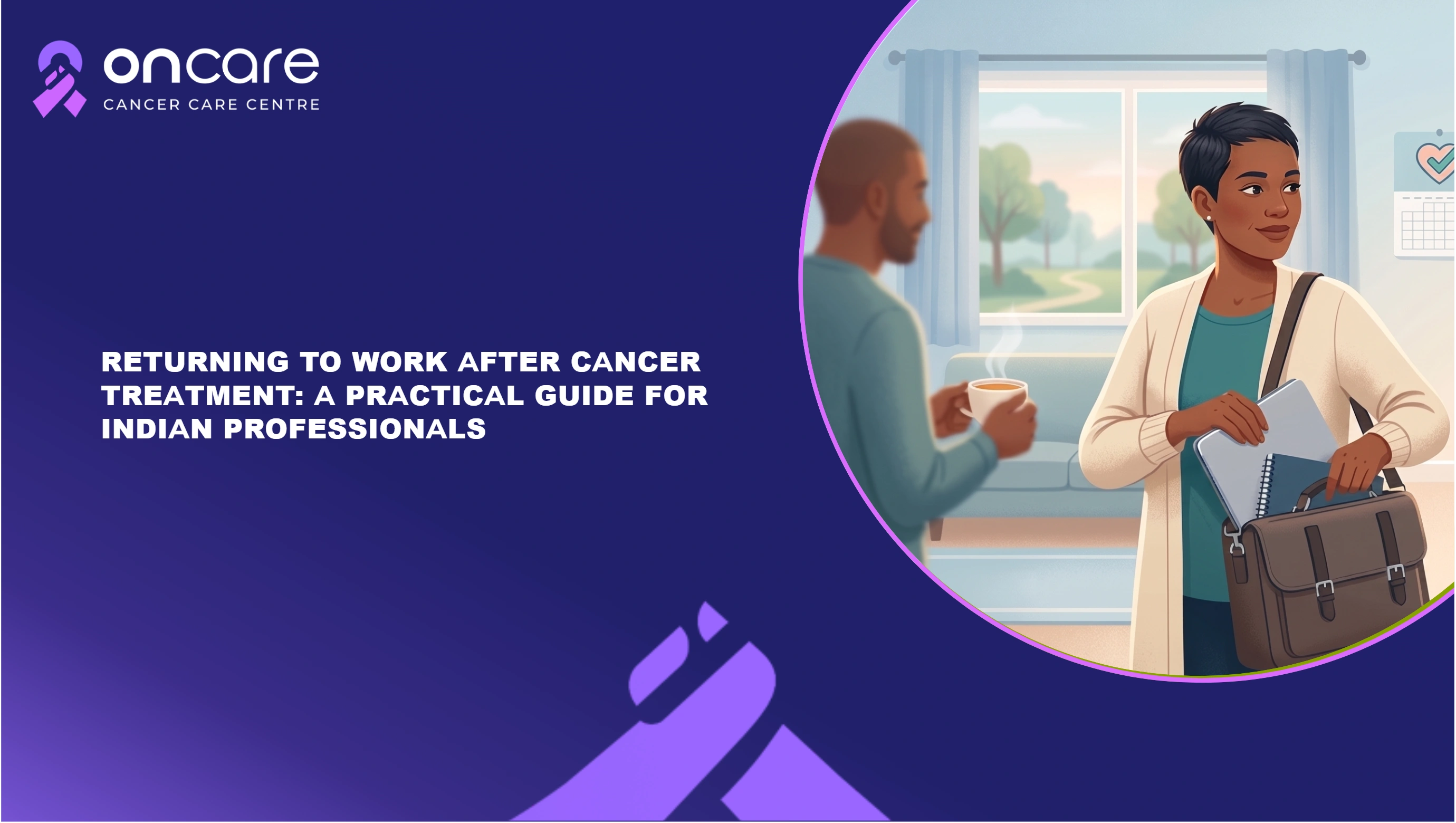
returning back to work after cancer treatment can feel like returning back to a place you know but that feels different. People can assume you look the same, but things have changed within. You might not have as much energy, confidence, or focus as you used to.
So, how can you come back to work without feeling too stressed? How do you reconcile getting better with doing your job?
This article is aimed to help you change one step at a time. We'll speak about everything you need to know to help this phase go more easily and be simpler to handle, like how to tell if you're ready to talk to your supervisor and how to control your workload.
Knowing if you're ready to leave
Understanding your physical and emotional condition before returning to work is very important.
Getting in shape
Before coming back to work, it's important to verify how strong you are. Cancer treatments like chemotherapy, radiation, or surgery might leave you with long-lasting symptoms including fatigue, weakness, or a reduced immune system.
First, think of this:
Can you maintain your energy up for a few hours?
Is it easy for you to get to work?
Did your doctor tell you it was okay to go back to work?
You could be ready to take the first step if majority of these questions have a "yes" answer.
Being Ready Emotionally
It's equally as important to heal psychologically and emotionally. Many people who work worry about how well they do their jobs, what their coworkers expect from them, or even how their coworkers will see them.
It's okay to not know what to do. It's important to know how you feel and be ready to deal with them slowly.
Planning for a Smooth Return
Taking things slowly can help make your return to work easier and less stressful.
Start with an open mind.
It can be tiring to go back to work full-time immediately away. Consider:
At first, just a few hours a week
Do your work from home if you can.
Gradually taking on more work
This lets your body and mind get used to things without any stress.
Be honest with your supervisor.
It can make a tremendous difference to be honest. You don't have to tell them everything, but talking about what you can do and what you expect will help them understand.
You can say:
Hours that can change
Fewer things to accomplish at initially
During the day, breaks
Rights and Help for Workers in India
It's crucial to know what your rights are as an employee. There are a number of standards and processes in place to help those who have been sick return to work.
National Cancer Institute contains important information that will help you learn more about India's healthcare support systems and programs that help employees stay healthy.
Policies may vary from business to business, although many are becoming more friendly and helpful these days.
Taking care of your work and energy
Managing your energy properly can help you stay productive without feeling exhausted.
Put tasks in order of how important they are.
When you get back, don't try to do everything at once. Take note of:
Things that are very important
Jobs that aren't too hard on your body
Things to do that match how much energy you have right now
Take breaks a lot.
You can stay productive without getting exhausted by taking short breaks throughout the day. Taking a pause for 5 to 10 minutes can make you feel better in both your mind and body.
Common Issues and Helpful Answers
Issue | How You Might Feel | Answer that works |
|---|---|---|
Being tired | Lack of energy and being fatigued | Stop working and take breaks. |
Not being able to pay attention | Not able to concentrate | Do your work in short bursts. |
Emotions that cause stress | Doubt or worry about yourself | Get in touch with someone and ask for help. |
The body's limits | Pain or weakness | Don't push yourself too hard; just change tasks. |
Responding to Questions
Your coworkers might ask you how you're doing. You can choose how much you wish to share.
You can say something like "I'm getting better and taking it one step at a time" or "I'm doing better now, thank you" to keep your distance.
Regaining Your Confidence
It's normal to feel unsure at first. Your confidence will return as you go back into your routine.
How to Stay Healthy While Working
Taking care of your health while working is important for long-term recovery.
Pay attention to what your doctor says.
Keep going with:
Regular check-ups
Drugs that are given by a doctor
Ideas for living a healthy life
Your health should always be the most important thing.
Create a schedule that is well-balanced.
Find a way to balance work and rest:
Get a good night's sleep.
Don't work too hard and eat foods that are excellent for you.
It's better to be steady than to push yourself too much.
Mental Health on the Job
Your mental health is just as important as your physical recovery after cancer treatment.
How to Deal with Stress
If you don't deal with stress at work well, it can make your recovery take longer. Try some simple ways, like:
Take deep breathes.
Short walks
Listening to music that calms you down
Get help when you need it.
If you're feeling overwhelmed, don't be hesitant to talk to someone.
A coworker you can count on
A part of the family
A counselor who does this for a living
You don't have to do everything on your own.
Setting New Goals and Changing What You Expect
It's fine if your pace has changed. Instead of comparing yourself to how well you did in the past, think about how well you are doing now.
Every step forward counts:
Ending a workday
Doing a good job on a task
More energy today than yesterday
These small victories build your confidence over time.
Consult Today
It's not just about coming back to work after cancer treatment; it's also about finding a new balance between your employment and health. If you are patient, plan ahead, and ask for support, this transition might go more smoothly and provide you more control.
Take it one day at a time, listen to your body, and give yourself time to get used to this new chapter of life. Oncare Cancer Hospital is known for delivering cancer patients and survivors some of the best care and continuous help.





Frequently Asked Questions
It depends on how well you recuperate both physically and mentally, as well as what your doctor says.
A lot of employers are fine with flexible schedules, especially after you have medical care.
Take short breaks, do less work, and keep a consistent pace throughout the day.
Written and Verified by:
Dr. Gajendra Kumar Himanshu Exp: 10 Yr
Medical Officer
Book an Appointment
Related Blogs
Is There a Cure for Blood Cancer? Treatment Options Explained
Learn about the cure for blood cancer, its types, and treatment options like stem cell transplant, and immunotherapy. Get expert care at Oncare Cancer Hospital.
How Indian Families Support Loved Ones During Cancer Treatment
Learn how family support during cancer treatment helps patients stay strong emotionally, mentally, and physically. Discover the importance of care and unity.
Cancer and Diet in Indian Cuisine: Traditional Foods That Support Recovery
Explore cancer and diet in Indian cuisine and learn how traditional Indian foods support recovery. Consult Oncare Cancer Hospital today for expert cancer care.
Blood Cancer Treatment Cost in India: Is It Affordable for Indian Families?
Blood cancer treatment cost in India explained—know cost breakdown, factors affecting pricing, treatment options, and get expert, affordable care at Oncare.