Table of Contents
What Is Pharyngeal Cancer? Key Facts You Need to Know

By Raveena M Prakash


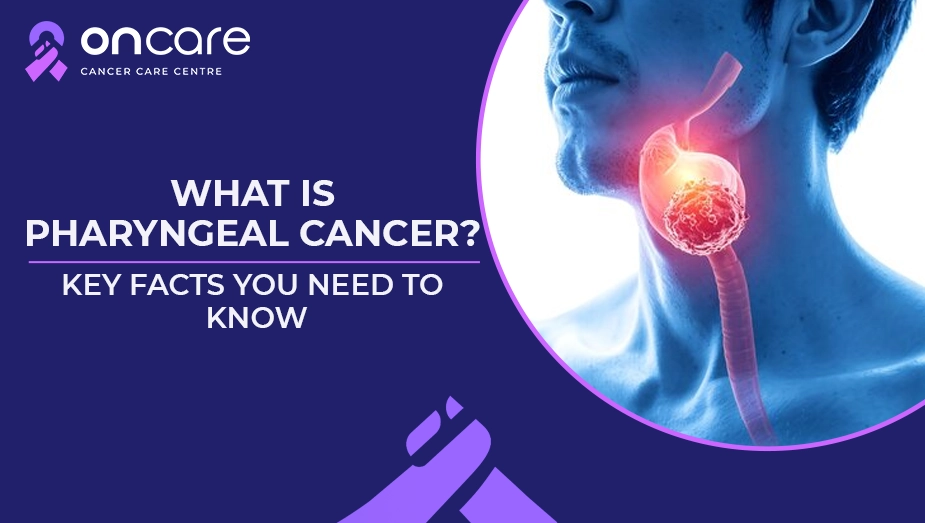
Pharyngeal cancer, a type of throat cancer, is a complex and serious form of cancer. It affects the throat and plays a crucial role in essential daily functions like breathing, swallowing, and speaking. Despite not knowing the severity of this cancer, many people develop pharyngeal cancer without knowing its warning signs. People with an increased awareness about this health concern can lead to early diagnosis, better treatment outcomes, and improved survival rates.
In this blog, we’ll discover more about pharyngeal cancer including its types, symptoms, causes, diagnosis and treatment options and prevention tips.
What is Pharyngeal cancer
Pharyngeal cancer is a type of head and neck cancer that occurs when abnormal cells grow uncontrollably in the tissues of the pharynx. Most of the pharyngeal cancers are classified as squamous cell carcinomas, which originate in the thin, flat cells lining the inside of the throat.
Based on the affected area, pharyngeal cancer is often categorized into:
- Nasopharyngeal cancer
- Oropharyngeal cancer
- Hypopharyngeal cancer
Oropharyngeal cancer has gained increased attention in recent years due to its strong connection with human papillomavirus infection.
Common signs and symptoms
The symptoms of pharyngeal cancer can vary depending on the location and stage of the disease. In its early stages, symptoms may be mild or easily misunderstood for any common throat infections. However, constant worsening of symptoms should never be ignored or overlooked.
Common symptoms of pharyngeal cancer, including:
- Sore throat that does not go away
- Pain or difficulty while swallowing
- A lump or swelling in the neck
- Hoarseness or voice changes
- Unexplained weight loss
- Chronic cough or coughing up blood
- Consistent nasal congestion or nosebleeds
If any of these cancer symptoms lasts longer than two weeks, it is important to get an immediate medical evaluation.
Causes and risk factors
There are several factors that can increase the risk of developing pharyngeal cancer. Understanding these risk factors can help with prevention and early diagnosis of this cancer.
Major risk factors include:
- Tobacco use
- Excessive alcohol consumption
- HPV infection
- Poor oral infection
- Diet low in fruits and vegetables
- Exposure to harmful chemicals such as asbestos and wood dust
- Weak immune system
- Family history of head and neck cancers
Many studies suggest that anyone can develop these cancers, and they are more commonly diagnosed in people over the age of 40 and occur more frequently in men.
How is pharyngeal cancer diagnosed?
Early diagnosis is considered vital for any successful cancer treatment and its better outcomes. If pharyngeal cancer is suspected in any individuals, doctors might use a combination of tests to confirm the diagnosis and detect the cancer’s stage.
Here are some of the diagnostic methods, including:
- Physical examination of the throat, mouth, and neck
- Endoscopy, is using a thin, flexible with a camera to examine the pharynx
- Imaging tests, such as CT scans, MRIs, or PET scans, to assess tumor size and spread
- Biopsy is used to confirm the cancer by collecting the presence of small tissue and is examined under microscope.
Once a person detects this cancer, the doctor performs tests to find out its stage. It helps to determine how advanced it is and whether it has spread to the nearby lymph nodes or other parts of the body.
Treatment options
The treatment for this cancer depends on several factors, including the location of cancer, stage, and the patient’s overall health conditions. A team of cancer specialists typically contributes to develop the most effective cancer treatment plan.
The common treatment plan may include:
- Surgery: It helps to remove cancerous tissue while preserving as much function as possible.
- Radiation therapy: These treatments help to destroy cancer cells or shrink tumors.
- Chemotherapy: These treatments are often used in combination with radiation for advanced cases.
- Targeted therapy: These treatments started to attack specific cancer characteristics.
- Immunotherapy: Performing these treatments helps the immune system to recognize and fight cancer.
Advancements in cancer treatments have significantly improved the survival rates, especially for HPV- related oropharyngeal cancers.
Life after treatment and recovery
If you are completing treatments for pharyngeal cancer, recovering from the side effects of treatments can be challenging both emotionally and physically. Many patients after the treatments might experience difficulty swallowing, speech changes, fatigue, or nutritional issues. If needed, get professional help, such as rehabilitation services like speech therapy, nutritional counseling, and psychological support, which play a vital role in recovery.
Additionally, patients should follow regular cancer screenings and visits are crucial roles to monitor for recurrence and manage long-term side effects. Many patients have gone on to live healthy and productive lives after cancer treatments.
Can Pharyngeal cancer be prevented?
Many studies suggest that not all pharyngeal cancer cases can’t be prevented, while adopting healthy lifestyle choices and necessary adjustments can greatly reduce the risk of pharyngeal cancer.
Some of the prevention tips may include:
- Avoid the use of tobacco products entirely
- Limit the use of excessive alcohol consumption
- Getting vaccinated against HPV infection
- Maintaining good oral hygiene
- Eating a balanced diet rich in fruits and vegetables
- Attending regular medical and dental checkups
Early diagnosis through awareness remains one of the most powerful tools to fight against this complex disease.
Consult Today
Pharyngeal cancer is a complex and serious health condition, but cancer awareness and early detection can make it a life-saving experience. Additionally, understanding the symptoms and risk factors and seeking timely diagnosis and effective cancer treatments improve the treatment outcomes.
At Oncare, we offer premium-quality cancer treatments, including advanced cancer surgeries, at an affordable price range with an experienced cancer specialist consultation.
If you or any loved ones of yours are diagnosed with cancer, then visit Oncare Cancer Hospital and book an appointment with our experienced cancer specialist today. Get an estimated cost of your cancer treatments today!
Frequently Asked Questions
The symptoms of pharyngeal cancer include sore throat, difficulty in swallowing, experiencing a lump in the neck, ear pain, voice changes and hoarseness, sudden weight loss, vomiting blood, and an ulcer in the oral area.
The pharyngeal cancers are often known by its classification of the throat including nasopharyngeal cancer, oropharyngeal cancer, and hypopharyngeal cancer.
Here are some of the tests used to diagnose pharyngeal cancer, including endoscopy, radiography, ultrasonography, magnetic resonance imaging tests, CT scan, PET scan, and Biopsy.
Book an Appointment
Related Blogs

Living With Hypopharyngeal Cancer: Support & Treatment Guide
Discover more about Hypopharyngeal cancer and its symptoms, treatment options, managing treatment-related side effects and importance of emotional and psychological support!

दिल्ली के टॉप ऑन्कोलॉजिस्ट कैसे चुनें? विशेषज्ञों की गाइड
जानिए दिल्ली के टॉप ऑन्कोलॉजिस्ट कैसे चुनें, कौन सा विशेषज्ञ आपके कैंसर के लिए सही है, डॉक्टर का अनुभव क्यों जरूरी है और Oncare Cancer Hospital क्यों भरोसेमंद है।

दिल्ली में ब्लड कैंसर का सबसे अच्छा इलाज कहाँ मिलता है? पूरी गाइड
जानिए ब्लड कैंसर क्या होता है, इसके प्रकार, आधुनिक इलाज के विकल्प और दिल्ली में ब्लड कैंसर का सबसे अच्छा इलाज कहाँ मिलता है। सही डॉक्टर और अस्पताल चुनने की पूरी जानकारी।

दिल्ली के टॉप कैंसर स्पेशलिस्ट: सही डॉक्टर चुनने का सरल तरीका
जानिए दिल्ली के टॉप कैंसर स्पेशलिस्ट कौन हैं, सही डॉक्टर और अस्पताल कैसे चुनें, इलाज के प्रकार, आधुनिक तकनीक और भरोसेमंद कैंसर देखभाल की पूरी जानकारी।