Table of Contents
Molecular Testing for Thyroid Cancer: What to Know?

By Prashant Baghel


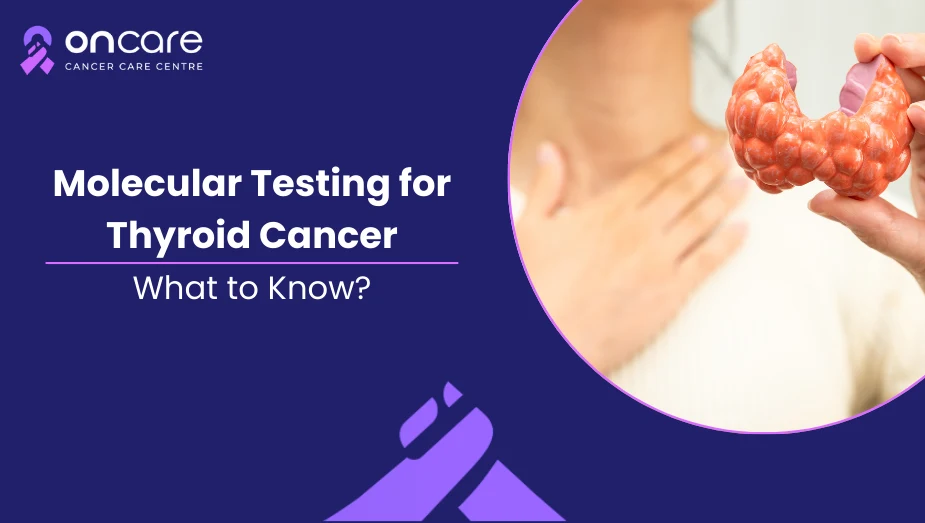
It can be hard to hear that you potentially have thyroid cancer. A lot of patients are told that a thyroid nodule was identified, but the test data aren't very clear. This is where a lot of dread and uncertainty start. One essential question comes to mind for patients and their families. How certain is the diagnosis?
Doctors now answer this question differently because of molecular testing for thyroid cancer. It makes things clearer and lessens doubt. We will talk about molecular testing for thyroid cancer in this article in a way that is extremely simple and easy to understand. You will discover what it is, why it is done, how it helps doctors figure out what is wrong, and how it helps them decide what to do next.
How to Understand Thyroid Cancer and Get a Diagnosis
The thyroid is a small, butterfly-shaped gland in the neck that governs a lot of the body's processes. Cells in the thyroid gland start to grow in an unusual way, which is how thyroid cancer originates.
Most thyroid nodules are not cancerous. Ultrasound and a small needle biopsy are common ways for doctors to assess nodules. But in some circumstances, the results of a biopsy are not clear. This is when molecular testing comes in handy.
What Is Molecular Testing for Thyroid Cancer
Molecular testing looks at the DNA in thyroid cells. It looks for certain genetic alterations that are connected to thyroid cancer.
This test doesn't just look at cells under a microscope; it also looks at their DNA and RNA. These genetic details help doctors figure out if a nodule is more likely to be malignant or not.
A biopsy is still needed even after molecular testing. It gives you extra information when the biopsy results are not clear.
When to Get Molecular Testing
If the results of a biopsy aren't obvious, molecular testing is usually recommended. This happens a lot, and it might make patients unsure about what to do next.
Biopsy Results Not Clear
Sometimes the results of a biopsy are not clear. Doctors can't say for sure if there is cancer. Molecular testing helps clear up this uncertainty by giving more information about the cells.
Not Having Surgery That Isn't Essential
If cancer is not confirmed, a lot of individuals are worried about surgery. Molecular testing can assist in finding nodules that are unlikely to be cancerous.
This lets some people skip surgery and prefer cautious monitoring instead.
Helping With Decisions About Surgery
Doctors may be more sure about recommending surgery if molecular testing shows genetic changes that are very likely to happen.
This helps make sure that surgery is only done when it's really necessary.
Different Kinds of Molecular Tests for Thyroid Cancer
Different kinds of molecular assays are utilized to look at thyroid nodules. Every test looks for certain genetic patterns.
Testing for Gene Mutations
This kind of test looks for gene mutations that are known to be connected to thyroid cancer.
Finding specific mutations makes it more likely that a nodule is malignant.
Testing for Gene Expression
Gene expression studies look at how active some genes are in thyroid cells.
By looking at patterns in gene activity, these tests can help figure out how likely it is that someone will get cancer.
Molecular Panels That Work Together
Some assays look at both mutations and gene expression. These panels give a more complete view and make it easier to make a diagnosis.
How Molecular Testing Aids in Treatment Planning
Molecular testing is useful for more than just diagnosis. It also helps doctors decide what to do.
Some variations in genes can show how aggressive the cancer might be. This helps surgeons figure out how much surgery is needed and what kind of follow-up treatment is needed.
Sometimes, molecular results help doctors decide if they should take out only part of the thyroid or the whole gland.
Advantages and Disadvantages of Molecular Testing
Molecular testing has a lot of good things about it, but it also has some bad things.
Advantages for Patients
Molecular testing makes things less ambiguous and stressful. It helps people choose the right surgery and treatment for themselves. It also minimizes the possibility of having to have extra treatments.
Things to Keep in Mind
There is no such thing as a perfect test. Molecular testing does not guarantee that it will work. Results should always be looked at with biopsy results, imaging, and clinical judgment.
The Importance of Expert Interpretation
Experts need to look at the results of molecular tests. Doctors who have been around for a while know how to use these results correctly. It's really crucial to pick the correct cancer center.
How Molecular Testing Affects Your Emotions
It can be stressful to wait for test results. A lot of people are nervous while they wait for answers.
Doctors who talk to their patients clearly can help them feel less scared. Knowing what the test indicates and what it doesn't signify can help you feel better. During this period, family and healthcare teams are very important.
Why It Matters to Have Expert Cancer Care
Molecular testing needs labs that are up to date and experts who know what they're doing. Not every center has the same amount of knowledge.
A specialized cancer hospital makes sure that tests are done correctly, that the results are understood correctly, and that a suitable treatment plan is made. This makes things better for patients and gives them more faith in the process.
Consult Today
Molecular testing for thyroid cancer is now an important part of current diagnosis and treatment. It helps make sense of biopsy data that aren't obvious, helps doctors decide what to do, and cuts down on surgeries that aren't needed. It doesn't take the place of regular tests, but it gives doctors and patients more genetic information that helps them make better choices.
Oncare Cancer Hospital has skilled doctors, sophisticated technology, and patient-centered treatment programs that are meant to enhance results and provide patients with peace of mind. They offer advanced molecular testing, expert diagnosis, and individualized care for thyroid cancer.
Frequently Asked Questions
No, it is usually only suggested when the results of a biopsy are not obvious.
No, it helps figure out the danger, but it can't make a diagnosis on its own.
No, it works with biopsies and other tests.
Yes, it uses the same biopsy sample and doesn't require any more steps.
Book an Appointment
Related Blogs
Types of Thyroid Cancer and How They’re Treated
Discover more about types of thyroid cancer and their treatment options, how treatment options differ, and why early diagnosis and personalized treatments matter!
Is Thyroid Cancer Curable with Surgery Alone?
Wondering if thyroid cancer is curable? Discover how surgery and other treatments can help most people recover fully and live healthy, active lives.
Papillary Adenocarcinoma in Thyroid, Lung, and Other Organs
Discover more about papillary adenocarcinoma in the thyroid and lung, its symptoms and diagnosis, prognosis and treatments, and papillary adenocarcinoma in other organs!
Iodine Therapy for Thyroid Cancer Patients: What to Expect
Discover more about Iodine therapy for thyroid cancer patients, what to expect before and after the procedure, risks and side effects of these processes, and tips for patients!