Most people believe that lung cancer only develops symptoms in later stages. But the truth is that early-stage lung cancer (Stage 1) can also display indications that are hard to notice. A little cough. A little pain in the chest. More fatigued than usual.
These symptoms might not seem like a big deal, but they can be early signs of something worse. The difficulty is that many individuals don't pay attention to them until the condition has already worsened.
The National Cancer Institute says that finding lung cancer early makes treatment far more effective. Let's learn about the early signs and how to spot them in time.
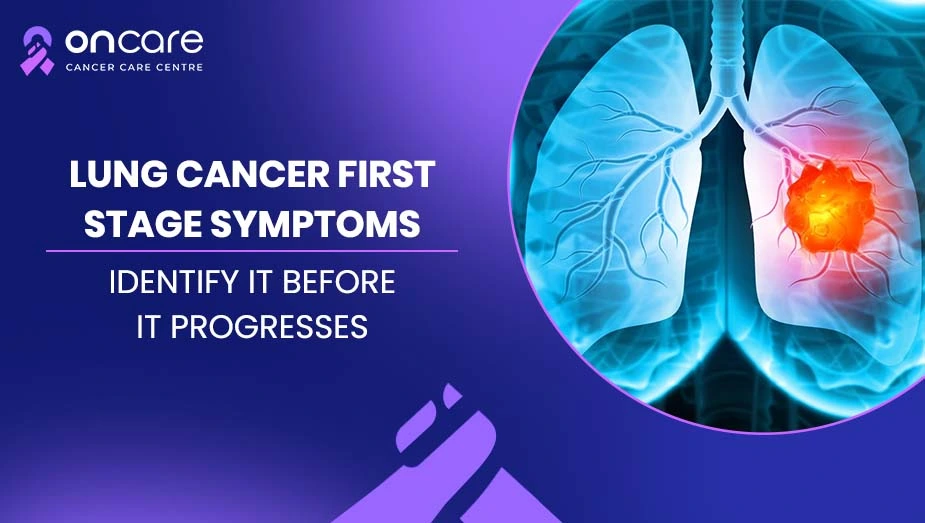
What is lung cancer in stage 1?
Stage 1 lung cancer signifies that the cancer is only in the lungs and hasn't spread to other parts of the body or lymph nodes. It is considered the first stage and is often easier to treat than later stages.
But lung cancer in its early stages may not always show obvious signs, which makes it all the more vital to be attentive.
Don't Ignore These Early Signs of Lung Cancer
1. Persistent Cough
One of the most prevalent early indicators is a cough that won't go away or keeps getting worse.
- Lasts longer than two to three weeks
- With mucus or dry
- Not responding to standard treatment
2. Pain in the chest
Mild but persistent chest pain can be an early sign.
- Pain when you breathe or cough
- Feeling tight in the chest
- Pain that doesn't go away
3. Trouble breathing
You can have trouble breathing while doing typical things.
- Breathless while walking
- Less stamina
- Breathing heavily without trying
The NHS says that shortness of breath is a common sign of lung cancer.
4. Tiredness and Weakness
If you're fatigued for no reason and it doesn't get better with rest, it could be an indication.
- Not enough energy
- Feeling weak all day
5. Changes in your voice or hoarseness
If cancer affects adjacent nerves, it might change your voice, making it hoarse.
- A voice that is rough or weak
- Hard to talk clearly
6. Chest infections that happen a lot
Repeated infections, such as bronchitis or pneumonia, could be an indication.
- Infections that keep coming back
- Slow healing
7. Losing weight for no reason
An early sign of this disease can be losing weight without trying.
- Weight loss that happens all of a sudden
- Loss of interest in food
Early vs Later Symptoms
Feature | First Stage (Stage 1) | Advanced Stage |
|---|---|---|
Cough | Mild and long-lasting | Very bad, with blood |
Pain | Some discomfort | Chest ache that is quite bad |
Breathing | A little hard | Very bad shortness of breath |
Losing Weight | A little | Important |
Spread | No spread | Spread to other parts of the body |
Who Is More Likely to Be Affected?
Some things make lung cancer more likely:
- Smoking (the biggest risk factor)
- Smoking without doing anything
- Pollution in the air
- Being around dangerous chemicals
- History of the family
The World Health Organization says that smoking is one of the main causes of lung cancer in the world.
When is it time to see a doctor?
If you have any of the following, you should see a doctor:
- Coughing lasts longer than two to three weeks.
- It gets hard to breathe
- You feel discomfort in your chest.
- You feel tired for no apparent reason.
The CDC says that people with symptoms that don't go away should see a doctor right away.
Why it's important to find things early
Finding out early can:
- Raise the chances of survival
- Let therapy be less harsh
- Make recuperation better
Surgery or targeted therapy can often successfully treat Stage 1 lung cancer.
How do doctors find early lung cancer?
Doctors may suggest:
- X-ray of the chest
- CT scan and biopsy
Screening is very crucial for people who are at high risk.
Is it possible to stop lung cancer?
You can lower your risk by:
- Not smoking
- Avoiding dirty places
- Wearing safety gear in dangerous work environments
- Keeping a healthy way of life
Disclaimer for Medical
This post is simply meant to give you information and should not be taken as medical advice. Always talk to a certified healthcare expert about diagnosis and treatment.
Consult Today
Early-stage lung cancer frequently has minor symptoms that are easy to miss. But even little changes can have a tremendous effect if you pay attention to them.
You should not ignore a cough that won't go away, shortness of breath, or tiredness that won't go away.
If you detect any strange symptoms, don't wait to see a doctor.
You can look into Oncare Cancer Hospital and other trusted cancer care clinics for the right diagnosis and treatment.
Frequently Asked Questions
1. What is the first sign that someone has lung cancer?
A cough that won't go away is often the first sign.
2. Is it possible to find lung cancer at stage 1?
Yes, through screening and early medical examinations.
3. Can you cure stage 1 lung cancer?
If caught early, it can be treated quite well in many situations.
4. How long should a cough last before you start to worry?
If it lasts longer than two to three weeks, see a doctor.