Table of Contents
Invasive Ductal Carcinoma: Complete Care & Recovery Guide

By Raveena M Prakash


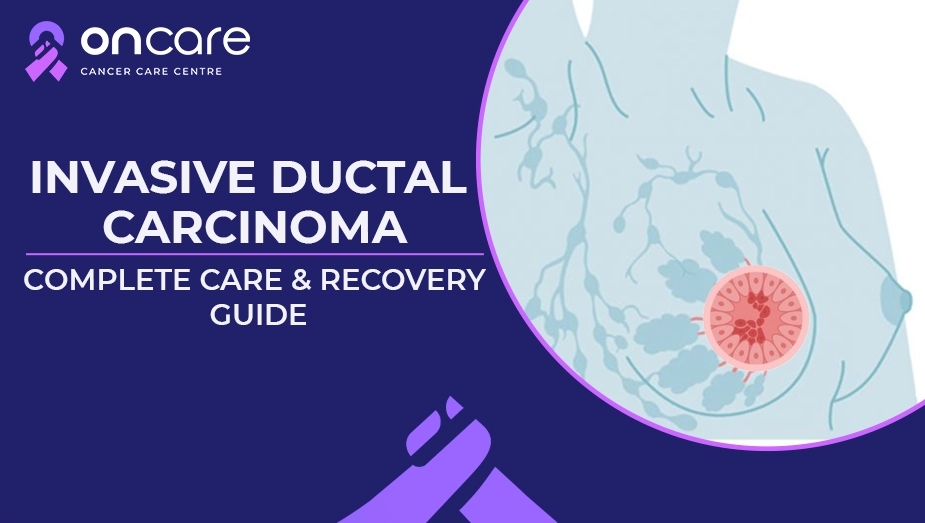
A breast cancer diagnosis can feel overwhelming, especially when you are faced with medical conditions such as Invasive ductal carcinoma. This is one of the most common types of breast cancer and accounts for about 80% of all breast cancer cases in females. With advances in early diagnosis and personalised treatment, IDC is considered more treatable today than ever before.
In this article, we’ll discover more about what IDC is and how it is treated and what the recovery process and life after treatment can look like, step by step.
What is Invasive Ductal Carcinoma?
Invasive Ductal Carcinoma (IDC), is the most common form of breast cancer, accounting for about 70 to 80% of all cases. These types of cancer develop in the milk ducts of the breast and become ‘invasive’ when cancer cells break through the duct walls and spread into the surrounding breast tissues. From there, it can potentially start to spread to the lymph nodes or other parts of the body.
Signs and symptoms to watch for
Women who perform regular mammograms help to detect an invasive ductal carcinoma before you have any noticeable symptoms.
When IDC develops in a patients, they may include:
- A lump in the breast or underarm
- Changes in the breast size, shape and appearance
- Skin dimpling and thickening
- Nipple inversion
- Discharge from nipple
- Redness, scaliness or pain in the breast
If you start to notice any of these changes, it's important to consult a healthcare provider.
Diagnosis
The real cause of developing invasive ductal carcinoma in women is not clear yet. A healthcare provider might perform a physical examination; they will also check the swollen lymph nodes present in the armpit.
They may also order these tests, including:
- Mammogram: These are often considered as first tests to identify any noticeable symptoms.
- Breast ultrasound or MRI: These tests help to get a clearer image of the cancers in patients.
- Biopsy: Performing a biopsy helps to confirm whether cancer is present or not.
- Pathology testing: These tests help to detect the hormone receptor status (ER, PR).
These test results help doctors to design personalized treatment plans.
Treatment options
IDC treatment is not a regular treatment that is the same for every patient. The treatments basically depend on factors such as the cancer stage, tumor biology, and individual health conditions.
These may include:
Surgery
In some cases, a healthcare provider might recommend to get surgery, then it may be mastectomy and lumpectomy.
- Lumpectomy: These surgeries help to remove the tumor while preserving the breast.
- Mastectomy: These surgical procedures help to remove the entire breasts.
- Lymph node evaluation: This is a surgical procedure, typically done via sentinel lymph node biopsy performed to check whether the breast cancer has spread to the underarm lymph breasts.
Radiation therapy
These treatments are often used after surgery to destroy remaining cancer cells and reduce the cancer recurrence in patients.
Chemotherapy
These treatments can be given before surgery (neoadjuvant) or after surgery (adjuvant), especially for aggressive or advanced cases of cancer.
Hormone therapy
For hormone receptor-positive IDC types, there are medications such as tamoxifen or aromatase inhibitors that can help to prevent cancer recurrence.
Targeted Immunotherapy
For HER2-positive or specific cancer types, many healthcare providers suggest that targeted drugs can be highly effective in patients with fewer side effects than traditional chemotherapy treatments.
Recovery: What to expect after treatment
Recovery after an Invasive Ductal Carcinoma (IDC) treatment is a gradual process that involves both body and mind. These usually include physical healing, managing side effects, and regaining strength, which are just as important as emotional well-being.
As we all know, recovery is both physical and emotional, and it looks different for everyone, including:
- Physical recovery
- Fatigue is common and might last months.
- Surgical healing can take weeks.
- Managing side effects such as hair loss, nerve pain, or swelling might occur.
- Gentle movement includes good nutrition, and follow-up care plays a big role in cancer healing.
- Emotional and mental well being
Many people might experience anxiety, fear of cancer recurrence, or body image concerns. Joining cancer support groups, counseling and open conversations with loved ones can make a huge difference.
Life after IDC treatments and Long - term care
Completing the treatment for Invasive Ductal Carcinoma marks the beginning of the new chapter, mainly focused on healing, recovery, and reclaiming your life. Even after completing successful cancer treatment, an on-going care is essential to monitor the health, prevent the risk of cancer recurrence and support overall wellness.
Here’s the life after treatments for IDC, which doesn’t mean life after care.
A Long-term breast cancer survivorship often includes:
- Regular follow-ups appointments and imaging tests
- An ongoing hormone therapy (for some patients)
- Monitoring the bone health and heart health
- Rebuilding the confidence and body strength
Many IDC survivors go on to live full, healthy lives, finding new purpose and resilience to live their lives in a completely thoughtful and meaningful manner.
Consult Today
An invasive ductal carcinoma diagnosis can be life-changing, but it is also treatable and manageable with modern medicine and strong support from an experienced cancer specialist consultation. Cancer awareness and knowledge empower patients and caregivers to make more informed decisions, advocate for the best care, and approach recovery with hope and confidence.
At Oncare, we offer premium-quality cancer treatments, including advanced cancer surgeries, at an affordable price range with an experienced cancer specialist consultation.
If you or any loved ones of yours are diagnosed with cancer, then visit Oncare Cancer Hospital and book an appointment with our experienced cancer specialist today. Get an estimated cost of your cancer treatments today!
Frequently Asked Questions
Here are some of the common types of invasive ductal carcinoma, including triple-negative breast cancer, HER-2 positive breast cancer, ER positive breast cancer, and PR positive (PR+) breast cancer.
Here are some of the causes of these cancers including smoking, consuming beverages containing alcohol, obesity, having a previous exposure to radiation therapy, starting your menstrual cycle earlier or later than usual and having children later in life.
Here are some of the symptoms of invasive ductal carcinoma, including a change in the size, mass, or lump, which might appear as small as a pea, or a lump or thickening in or near skin on the breast or nipple. A marble-like hardened area under your skin and blood-stained or clear fluid discharge from your nipple.
Book an Appointment
Related Blogs
Fibrolamellar Carcinoma: Everything You Need to Know
Fibrolamellar carcinoma is a rare liver cancer affecting young people with healthy livers. Learn its symptoms, causes, diagnosis, and treatment options.
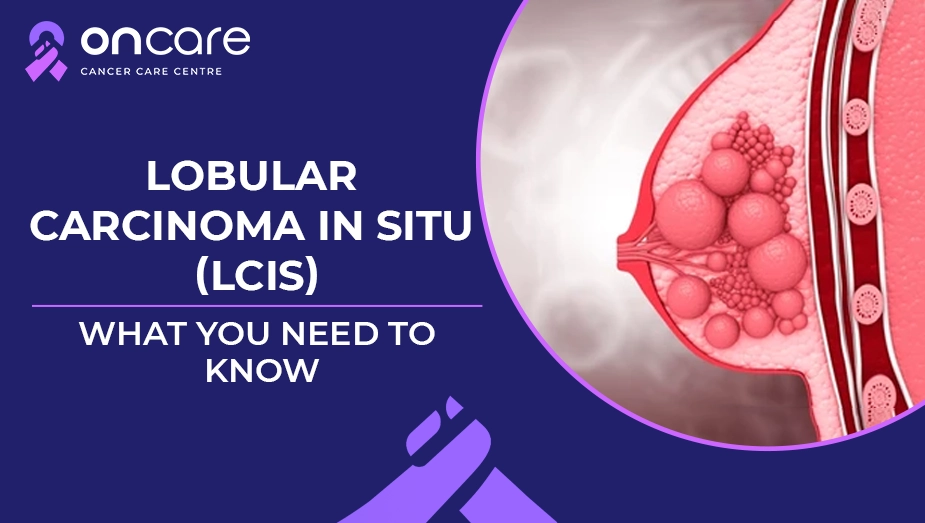
Lobular Carcinoma In Situ (LCIS): What You Need to Know
Learn more about Lobular Carcinoma In Situ and its types, causes and risk factors, symptoms, diagnosis, treatment options and lifestyle adjustments to lower the risks.

Verrucous Carcinoma: A Slow-Growing But Serious Cancer Type
Discover more about verrucous carcinoma and its causes, signs and symptoms, risk factors, how verrucous carcinoma is diagnosed, and its treatments and prevention!

Hepatocellular Carcinoma: Prevention, Detection & Care
Discover more about hepatocellular carcinoma and its common risk factors and its prevention, the importance of early detection, treatments, and living with liver cancer!