Table of Contents
Immunotherapy vs Radiation Therapy: Side Effects, Cost & Results

By Prashant Baghel


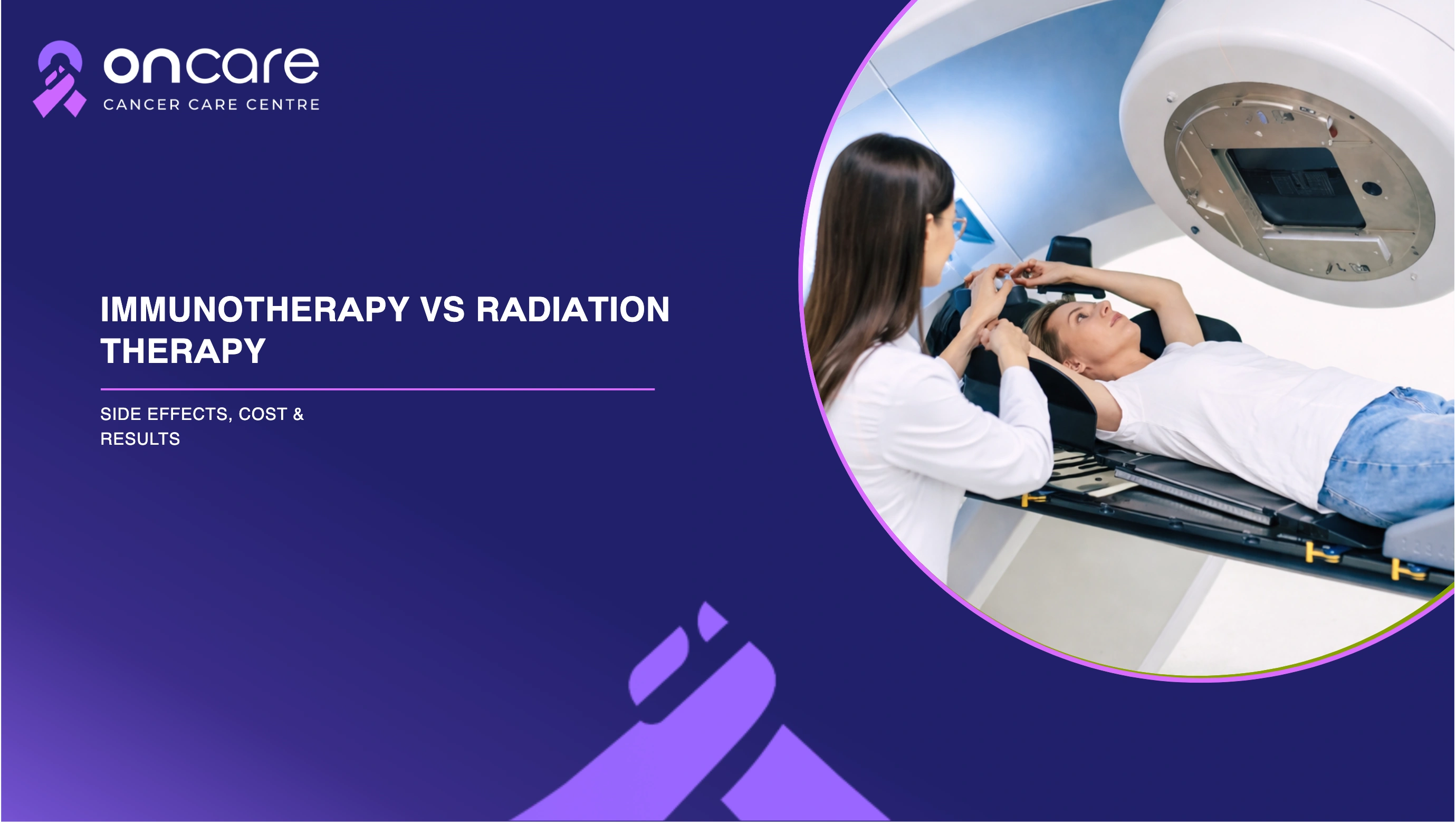
In the last few years, cancer treatment has changed a lot. Before, most individuals only knew about radiation and chemotherapy. But now, many patients are hopeful because of a breakthrough medication called immunotherapy. If you or someone in your family has cancer, you may be wondering which is better: immunotherapy vs radiation.
It's not easy to say which treatment is better because they work in different ways. Knowing their side effects, cost, and results might help you and your doctor make a better choice when comparing immunotherapy vs radiation.
What sets immunotherapy vs radiation apart?
Radiation therapy is a standard way to eliminate cancer cells using high-energy photons. cancer goes straight to the tumor and breaks its DNA, which stops cancer from growing. This treatment normally only works on one part of the body.
Immunotherapy is not the same. It doesn't immediately fight cancer. Instead, it makes your immune system stronger so it can find and kill cancer cells on its own. In many circumstances, this makes it a more mature and focused approach in the comparison of immunotherapy vs radiation.
How radiation therapy works
Radiation therapy involves equipment that sends intense beams of energy into the body. These beams kill cancer cells in a certain location. It is commonly used for tumors that are easy to find, like those in the brain, breast, or lungs.
Most of the time, the treatment is done in numerous sessions. Each session only lasts a few minutes, but the whole course can take weeks, depending on the condition.
How Immunotherapy Works
Immunotherapy makes your immune system smarter and stronger. The immune system can't always find cancer cells. This medication takes away the hiding ability, which lets the body fight cancer on its own.
Most of the time, it is delivered by IV drip or injection. The type of cancer and how well the patient responds determine how long the treatment cycle lasts.
Which Treatment Works Better?
The type and stage of cancer determine how well it works. Radiation therapy is effective for confined cancers. It works quickly and goes straight to the cancer location.
Immunotherapy, on the other hand, works better on malignancies that have spread or are advanced. In some circumstances, it works for a long time since the immune system keeps fighting even after treatment.
Sometimes, doctors utilize both medicines at the same time to attain better outcomes in cases of immunotherapy vs radiation.
Immunotherapy vs Radiation: Side Effects
When comparing immunotherapy vs radiation, side effects are a big deal. The two treatments have different effects on the body.
The adverse effects of radiation therapy mainly depend on where the treatment is happening. Some common problems are weariness, skin irritation, and edema in the area that was treated. For example, radiation to the chest may make it hard to breathe or hurt in that area.
Immunotherapy has varied adverse effects because it works on the immune system. Some people may have a temperature, feel tired, or have moderate bodily pain. The immune system can assault healthy organs in very rare circumstances, which can cause inflammation. But a lot of people think immunotherapy is easier to deal with than conventional treatments.
Comparing the costs of immunotherapy vs radiation
For most patients, cost is a big problem. Radiation therapy is usually cheaper because it has been around for a long time and is easy to find in hospitals.
Immunotherapy costs more. It costs more since it uses advanced medications and technology. The cost can change based on the kind of medicine and how many sessions are needed.
In other circumstances, though, immunotherapy may lower long-term expenditures because it can give enduring improvements and cut down on the need for more treatments when comparing immunotherapy vs radiation.
Results and Rates of Success
Both therapies have their pros and cons when you look at the results. Radiation therapy frequently works quickly, especially for malignancies that are still in their early stages. It can make tumors smaller and make symptoms go away faster.
Immunotherapy might not work right away, but it can help you for a long period. Some individuals have long-lasting responses, which means that the malignancy stays under control for a long time.
The type of cancer, its stage, and the patient's overall health all affect the chances of success. That's why doctors don't use the same treatment approach for everyone when deciding between immunotherapy vs radiation.
Consult Today
It's not about which one is better; it's about which one is best for your condition. Each treatment has its own pros and cons, as well as its own expenses. The best way to go is to have a specific treatment plan made by experts who know what they're doing.
Oncare Cancer Hospital has current therapies, including immunotherapy and radiation therapy, and knowledgeable doctors who can help you with your cancer care. Getting the correct help at the appropriate time might have a major impact on how quickly you get better.
Frequently Asked Questions
Both are usually safe, although immunotherapy usually has fewer side effects than you may see. The safety depends on how sick the patient is.
Yes, immunotherapy is usually more expensive because it involves new drugs and technologies.
Yes, in some circumstances, doctors commonly use both immunotherapy and radiation to achieve better results.
Radiation therapy normally works faster, although immunotherapy may take longer to work and have long-term effects.
Book an Appointment
Related Blogs
Baxter Pump for Chemotherapy: How It Helps Continuous Infusion
Learn more about the Baxter pump for chemotherapy and its continuous infusion chemotherapy and why the Baxter pump is important in chemotherapy and its benefits!
Is Hyperbaric Oxygen Therapy Effective for Cancer? What Studies Reveal
Learn how hyperbaric oxygen therapy for cancer works, its potential benefits alongside radiation and chemotherapy, safety considerations, and what studies reveal. Find expert care at Oncare Cancer Hospital.
Is Chemotherapy Treatment Painful for Breast Cancer?
Many people fear chemotherapy pain in breast cancer. Learn whether chemotherapy really hurts, what discomfort may occur, and how doctors manage pain during treatment.
Keytruda Immunotherapy: Which Cancers Is It Used For?
Discover more about Keytruda immunotherapy and biomarker-based approval, what cancers are treated with Keytruda, and its benefits, challenges, and considerations!