Table of Contents
How to Check for Mouth Cancer: Red Flags You Should Notice

By Prashant Baghel


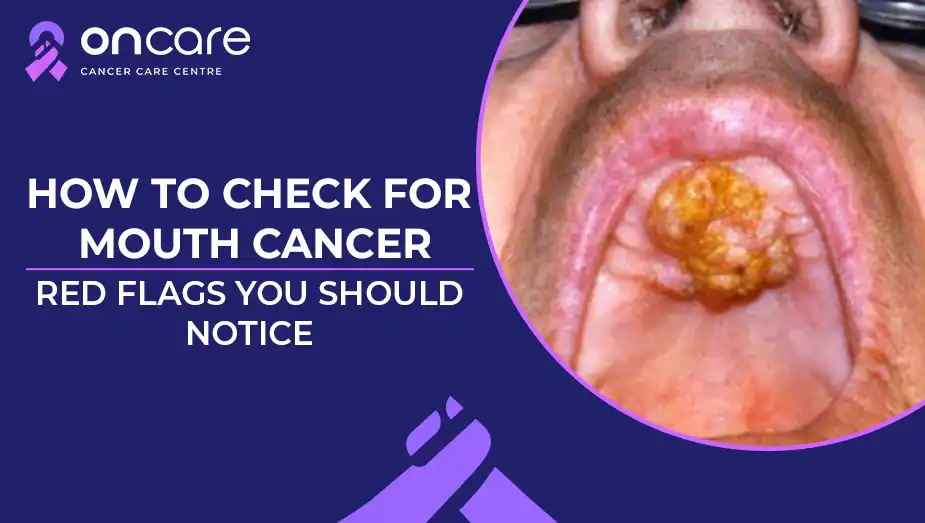
The body can give you little signs that something is wrong long before it gets bad. A little sore that won't go away, a small patch of redness, or a strange feeling in the mouth may not seem like a big deal, but they can sometimes be early signs that something needs to be looked at. A lot of people don't pay attention to these signs because they think they'll go away on their own. But if you catch mouth cancer early, it could save your life. It's important to know how to check for mouth cancer at home and what signs you shouldn't ignore.
This article uses simple, friendly language to explain everything so you know what to look for and when to see a doctor.
Mouth Cancer Explained in Simple Terms
Oral cancer, or mouth cancer, is when cells that shouldn't be there grow in any part of the mouth. The tongue, gums, lips, inner cheeks, roof of the mouth, and even the throat can all be affected. These abnormal cells may not grow very quickly at first, so it may be easy to miss the first signs. But if you know how to check for mouth cancer the right way, you can catch these small changes before they get worse.
Anyone can get mouth cancer, but smoking, chewing tobacco, drinking alcohol, or spending a lot of time in the sun on your lips can make it more likely. You can still get it even if you've never smoked. Everyone needs to check their mouth often for this reason.
Looking in the mirror to see your mouth
The first step in learning how to check for mouth cancer is to look inside your mouth. You don't need any special tools. All you need is a bright light, a mirror, and a few minutes.
Look closely at all the parts by opening your mouth wide. Check your gums, the sides of your tongue, under your tongue, the roof of your mouth, the inside of your cheeks, and your lips. You can also check for lumps or rough spots by gently touching these areas with clean fingers.
You can catch changes early by doing this once a month. If something looks or feels strange and doesn't go away in two weeks, you should see a doctor or dentist.
Wounds That Don't Heal
A sore that doesn't heal is one of the most common early signs of mouth cancer. It's normal to get mouth sores from time to time, but they usually go away in a week or two. If a sore lasts longer, gets bigger, or hurts, you should take it seriously.
If you want to know how to check for mouth cancer, keep this simple rule in mind: any sore in the mouth that lasts longer than two weeks needs to be seen a doctor.
These sores can show up on the lips, tongue, or cheeks. They might look like little cuts or open wounds. They can bleed easily at times. Even if the sore doesn't hurt, it could still be a sign of something wrong.
Patches of red or white
Red or white patches in the mouth are another important sign to look for. White patches can look thick or rough, while red patches can look shiny and angry. Sometimes, both colors show up at the same time.
Most red or white spots are not dangerous, but some can become cancerous if left alone. This is why it's important to check these patches early on when learning how to check for mouth cancer at home. You should see a doctor if a patch doesn't go away after two weeks.
Bumps, Swellings, or Thick Spots
As you check your mouth, lightly touch the inside of your cheeks, your gums, and under your tongue. If you feel a lump, a swollen area, or a spot that feels thicker than the rest, you should keep an eye on it. At first, cancer lumps are usually hard and don't hurt, so don't ignore them just because they don't hurt.
To know how to check for mouth cancer, you need to pay attention to even the smallest changes. You should see a doctor if a lump grows or feels strange.
Pain or trouble chewing or swallowing
If you have mouth cancer, simple things like chewing or swallowing can hurt. If you feel pain when you move your jaw or if food seems to get stuck in your throat, it could mean that something is wrong. A lot of people think this symptom is caused by a tooth problem and don't pay attention to it. But if it lasts for weeks, you should pay attention to it.
One way to learn how to check for mouth cancer is to pay attention to how your mouth feels when you eat. If you have pain that lasts a long time, trouble chewing, or a stiff jaw, these could be early warning signs.
Tingling or Numbness
If your tongue, lips, or any other part of your mouth feels numb, it could mean that the nerves aren't working right. When cancer cells push on nerves, this can happen. You should take the numbness seriously if it keeps coming back, even if it's only a little bit or for a short time.
Checking for numb spots is a key part of how to check for mouth cancer because numbness isn't a normal symptom and usually needs medical attention.
Changes in voice or hoarseness
Mouth cancer can sometimes spread to the throat and change the way your voice sounds. You might notice that your voice sounds rough or hoarse. If this change lasts for more than a few weeks, even if you don't have a cold, it could mean that something is wrong.
Yes, Part of learning how to check for mouth cancer is listening to your voice, since it can show changes happening in your mouth or throat.
Weight Loss for No Reason
People may eat less when their mouth or throat hurts, which can make them lose weight. But there are times when the body loses weight without trying. If you lose weight for no reason, it could be a sign of a lot of health problems, like cancer.
You should see a doctor if your weight is dropping without you trying and you also have other mouth problems. Losing weight by itself does not mean you have mouth cancer, but you should not ignore it if it happens with other symptoms.
Bad Breath That Won't Go Away
Halitosis, or chronic bad breath, can also be a sign. Cancer cells can smell bad, and sores in the mouth can get infected. You might want to see a doctor if brushing, mouthwash, and taking care of your teeth don't help, and the bad smell keeps coming back.
One way to check for mouth cancer is to pay attention to changes in your breath that don't get better over time.
Pain or trouble with the jaw. Opening the Mouth Sometimes, mouth cancer can spread to the jawbone, making it hurt to move. When you open your mouth wide, you might feel tightness or hear clicks and pops. These symptoms could also be caused by other things, but if they last for weeks, you should see a doctor. If it becomes hard to move your jaw, this is another sign that you should look for.
When to Go to the Doctor
If you have any symptoms for more than two weeks, no matter how small they seem, you should see a doctor or dentist. You can find signs of mouth cancer early by learning how to check for it at home, but only a doctor can confirm what's going on. Finding something early makes it easier and more likely to work.
To see if there are any abnormal cells, doctors might do a simple exam, take pictures, or suggest a biopsy. Getting checked out early can stop the problem from getting worse.
Consult Today
Learning how to look for mouth cancer is an important part of keeping yourself healthy. Sometimes, small changes in the mouth can be signs of bigger problems. Noticing them early can make a big difference. Regular self-exams, being aware of strange symptoms, and getting medical help when something feels wrong can all help find problems early and save lives.
Oncare Cancer Hospital has world-class support for expert diagnosis, advanced treatment, and caring for patients. Their skilled doctors and caring staff give patients with mouth cancer and other serious illnesses the best care and advice.
Frequently Asked Questions
You can look for sores, lumps, or patches in your mouth at home, but only a doctor can confirm them.
Once a month is a good time to check for early signs.
No, a lot of early signs don't hurt, which is why it's important to check often.
If any of your symptoms last longer than two weeks, you should see a doctor or dentist.