Table of Contents
Ductal Carcinoma In Situ: How It’s Detected and Treated

By Dr. Gajendra Kumar Himanshu


What if you could stop cancer before it gets to the point where it could kill you?
In many cases of Ductal Carcinoma In Situ (DCIS), this is exactly what happens. People commonly term it "stage 0 breast cancer," and although the word "cancer" sounds terrifying, DCIS is very treatable if caught early. The problem is that most people don't have any symptoms, thus it usually shows up during a routine test.
If you know what DCIS is, you can act at the correct time. In this post, you'll learn what DCIS is, how doctors find it, and the best ways to treat it.
What does "Ductal Carcinoma In Situ" mean?
Ductal Carcinoma In Situ is a disease in which abnormal cells are discovered in the milk ducts of the breast. These cells haven't moved out of the ducts and into the breast tissue around them.
Important Points:
- "In situ" means "in its original place."
- It hasn't spread, therefore it's not invasive.
- If left untreated, it could turn into invasive breast cancer. DCIS is not immediately life-threatening, but neglecting it could make things worse in the future.
Why it's important to find things early
DCIS is one of the first types of breast cancer to show up. Finding it early is a big advantage. Health organizations, such as the National Cancer Institute, say that early-stage breast disorders like DCIS have relatively high survival rates when they are treated correctly.
Advantages of Finding Out Early:
- Less harsh treatment is needed.
- Better likelihood of full recovery
- Less likely for cancer to spread
How do you find DCIS?
Most people find out they have DCIS through normal screening, not because they have symptoms.
1. Mammogram (Main Tool for Finding)
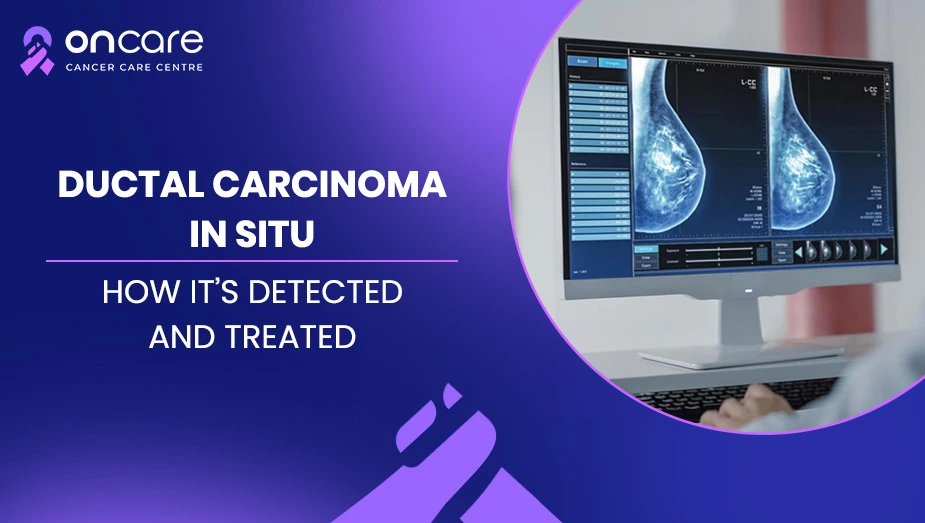
The most common approach to finding DCIS is using mammography. It can show little calcium deposits, or microcalcifications, that could mean there are aberrant cells.
Health groups, including the Centers for Disease Control and Prevention, say that women over 40 or those with risk factors should get frequent mammograms.
2. Breast Biopsy (Confirmation Test)
Doctors do a biopsy if they see something strange on a mammogram.
There are different kinds of biopsies, such as:
- Biopsy with a needle
- Core biopsy
- Biopsy via surgery
This test tells you for sure if the abnormal cells are DCIS or anything else.
3. MRI (Sometimes)
Doctors may use MRI scans for a closer look sometimes, especially if:
- The tissue in the breast is thick.
- The risk of breast cancer is high.
Signs of DCIS
Most of the time, DCIS doesn't cause any visible symptoms. But in rare cases, you can see:
- A bump in the breast
- Nipple fluid
- Changes in the form of the little breasts
Regular screening is very important because symptoms are not always present.
Things that make DCIS more likely
Some things can make it more likely that you will get DCIS:
Some Risk Factors:
- Age (more likely to happen after 40)
- A family history of breast cancer
- Genetic alterations, such as BRCA1 and BRCA2
- Therapy for replacing hormones
- Late pregnancy or not being pregnant
The World Health Organization says that things like being overweight and not getting enough exercise can also raise the risk of breast cancer.
DCIS Treatment Options
The purpose of treatment is to get rid of aberrant cells and stop cancer from coming back.
1. Surgery
a. Lumpectomy
- Only takes out the damaged area
- Keeps most of the breast intact
b. Mastectomy
- Takes out the whole breast
- Recommended for instances that are high-risk or widespread
Based on the size and location of your DCIS, your doctor will tell you what the best option is.
2. Radiation Treatment
After a lumpectomy, radiation is often given to:
- Get rid of any leftover aberrant cells
- Lower the risk of recurrence
It is a common and useful way to treat anything.
3. Hormone Treatment
If DCIS has hormone receptors, doctors may give hormone treatment. For example:
- Tamoxifen
- Aromatase inhibitors
These lower the risk of cancer coming back.
4. Active Monitoring (In Some Cases)
For some low-risk cases, doctors may suggest keeping a careful eye on the patient instead of treating them right away.
This method includes:
- Imaging regularly
- Checkups after the first one
It is currently being studied and is not right for everyone.
Care after recovery and follow-up
It's crucial to keep up with regular follow-up after therapy.
Follow-Up Includes:
- Mammograms per year
- Checkups
- Better ways of living
Staying healthy can also lower your risk of getting sick again.
How to Make Your Risk Lower
You can't stop all cases; however, you can lower your risk by doing the following:
- Being active physically
- Keeping a healthy weight
- Cutting back on alcohol
- Getting frequent checkups
- Not getting hormone therapy that isn't needed
When Should You Go to the Doctor?
If you see any of the following, you should see a doctor:
- Any changes in your breasts that are not normal
- Ongoing pain or discomfort
- Worries about family history
Routine screening is your best defense, even if you feel fine.
Summary Table: DCIS Detection and Treatment
Category | Details |
|---|---|
Detection Method | Mammogram, Biopsy, MRI |
Symptoms | Usually none, sometimes lump or nipple discharge |
Risk Factors | Age, family history, genetics, hormones, lifestyle |
Main Treatments | Surgery (Lumpectomy/Mastectomy), Radiation, Hormone Therapy |
Follow-Up Care | Regular mammograms, checkups, healthy lifestyle |
Prevention Focus | Exercise, weight control, screening, and limiting alcohol |
Consult Today
Ductal Carcinoma In Situ is one of the first kinds of breast cancer that doctors can treat. The most important thing is to find it early and seek treatment immediately away. Because of developments in treatment, most people who are diagnosed with DCIS go on to live normal, healthy lives.
If you or someone you care about has a problem with their breast health, it's crucial to choose the right care center. Oncare Cancer Hospital is a good place to get the best cancer care because its staff is caring, its doctors are experts, and it offers new treatment choices.





Frequently Asked Questions
Yes, some think that DCIS is the first stage of breast cancer (stage 0). It's not painful and is easy to treat if you catch it early.
If not treated, DCIS can become breast cancer that spreads to other regions of the body. That's why it's so important to figure out what's wrong and receive help immediately.
Most of the time, the best thing to do is have surgery. But in some low-risk situations, doctors may suggest active monitoring instead of initiating treatment immediately.
If you're over 40 or have risk factors, you normally need to get frequent mammograms as part of screening. Your doctor can help you figure out the best time for you.
Written and Verified by:

Dr. Gajendra Kumar Himanshu Exp: 10 Yr
Medical Officer
Book an Appointment
Related Blogs
Invasive Ductal Carcinoma: Complete Care & Recovery Guide
Learn more about Invasive Ductal Carcinoma and its symptoms, diagnosis, treatment options and what to expect after treatment and life after IDC and long-term care!

Fibrolamellar Carcinoma: Everything You Need to Know
Fibrolamellar carcinoma is a rare liver cancer affecting young people with healthy livers. Learn its symptoms, causes, diagnosis, and treatment options.
Lobular Carcinoma In Situ (LCIS): What You Need to Know
Learn more about Lobular Carcinoma In Situ and its types, causes and risk factors, symptoms, diagnosis, treatment options and lifestyle adjustments to lower the risks.

Verrucous Carcinoma: A Slow-Growing But Serious Cancer Type
Discover more about verrucous carcinoma and its causes, signs and symptoms, risk factors, how verrucous carcinoma is diagnosed, and its treatments and prevention!