Table of Contents
Ductal Carcinoma In Situ: Detection, Biopsy & Management

By Raveena M Prakash


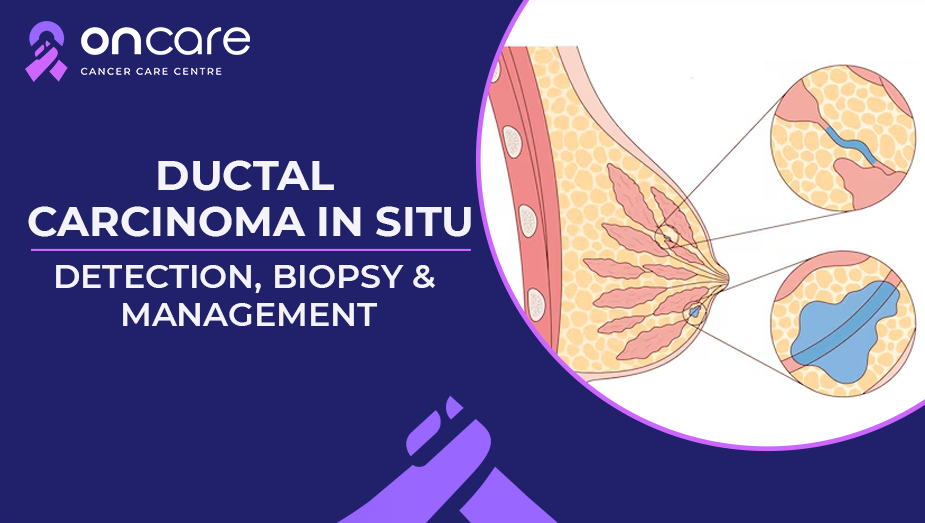
Ductal carcinoma in situ is one of the most commonly diagnosed types of early breast cancer today. The word ‘carcinoma’ can be alarming and intimidating; DCIS is considered non-invasive and highly treatable when detected in the early stages. Understanding how these can be treated, diagnosed, and managed can help to reduce anxiety and support more informed decision-making.
In this article, we’ll discover more about the detection of this condition, biopsy, and management of ductal carcinoma in situ patients.
What is Ductal Carcinoma In Situ?
A Ductal Carcinoma in Situ occurs when abnormal cells are found in the lining of the breast milk ducts but have not spread into the surrounding breast tissue. Because the cancer cells are in ‘in situ’ meaning located in one place. The DCIS is often classified as stage 0 breast cancer.
Many experts suggest that DCIS itself is not life-threatening, but it can increase the risk of developing an invasive breast cancer in the future if left untreated. That’s why getting an appropriate cancer diagnosis and management are important.
Diagnosis
In most cases of DCIS are detected before symptoms appear, usually through routine regular breast cancer screening.
These may include:
Mammography
This is the most common diagnostic method used for detecting any type of breast cancer. During a mammography, a DCIS often appeared as microcalcifications, such as tiny calcium deposits, clustered within the breast. These calcifications are usually too small to be felt during a physical examination.
Breast Ultrasound or MRI
Breast ultrasound is one among the breast cancer imaging methods, especially used in women with dense breast tissue.
While performing MRI can help access the excess of DCIS in certain cases, but is not routinely required.
Because DCIS can rarely cause a lump or pain, regular screening like mammograms play a crucial role in early detection.
Biopsy
In some cases, when the imaging tests suspect DCIS in the patients, a healthcare provider suggests performing a biopsy to confirm the cancer.
Types of biopsies used
Here are some of the biopsies used to perform in breast cancer patients, including:
- Core needle biopsy: In this procedure, a hollow needle removes small tissue samples from the suspected patients.
- Stereotactic biopsy: In this procedure, a practitioner uses mammogram guidance to target the calcification.
- Vacuum - assisted biopsy: In this procedure, it collects multiple tissue samples through one insertion.
Treatment options
The treatment and management of the DCIS can be dependent on factors such as the age, grade and extent of disease, and personal treatment preferences.
These may include:
- Surgery: In some cases, a healthcare provider performs breast-conserving surgery.
- Lumpectomy: Performing this surgery helps to remove the ductal carcinoma with a margin of healthy tissue.
- Mastectomy: In some cases, mastectomy is recommended when DCIS is expensive or present in multiple areas of the breast.
- Radiation therapy: These treatments are often recommended after a lumpectomy, and they reduce the risk of cancer recurrence in the same breast.
- Hormone therapy: These treatments are often used for hormone-receptor-positive DCIS. In some cases, a doctor using medications such as tamoxifen or aromatase inhibitors might increase the lower cancer recurrence risk.
- Active surveillance: In selected cases, your healthcare team might suggest continuing active surveillance whether low-risk DCIS cases can be safely monitored rather than immediately treated.
Prognosis and Outlook
Many experts suggest the outlook for DCIS is excellent, with very high survival rates. Most individuals treated for DCIS can never develop invasive breast cancer. However, early diagnosis and appropriate treatment management are key to getting positive treatment outcomes.
Living with a DCIS condition
Living with a DCIS condition can be triggering, and it can often bring a mix of emotions in patients, from relief at early detection to anxiety about the following treatment and uncertainty of its outcomes.
Ductal carcinoma in situ is highly treatable, but navigating through the medical decisions, follow-up care, and emotional well-being can truly feel overwhelming. Being diagnosed with DCIS can be emotionally challenging, even though it is an early-stage and highly treatable condition.
Many people can benefit from,
- Having an open discussion with your healthcare provider
- Seeking a second opinion if you are feeling uncertain about the treatment choices
- Join support groups or counseling for emotional well-being
Consult Today
DCIS generally represents an early opportunity for early medical prevention in breast cancer. Advances in imaging, pathology, and personalized treatment continue to refine how DCIS manages to aim to treat these conditions effectively.
At Oncare, we offer premium-quality cancer treatments, including advanced cancer surgeries, at an affordable price range with an experienced cancer specialist consultation.
If you or any loved ones are diagnosed with cancer, then visit Oncare Cancer Hospital and book an appointment with our experienced cancer specialist today! Get an estimated cost of your cancer treatments today!
Frequently Asked Questions
After the surgery, a healthcare provider might prescribe medications to prevent DCIS from recurring with this cancer. A doctor might use medicines such as tamoxifen and aromatase inhibitors; this treatment is called hormone therapy.
Here are some of the risk factors for developing DCIS, including having a family history of breast cancer, having a baby after 30, having dense breast tissue, having gene mutations with increased cancer risk, having previous radiation therapy directed at your breast, never being pregnant or breastfeeding, and starting menopause after 55.
Here are some of the treatments used to treat these conditions, including breast-conserving surgery, radiation therapy, and mastectomy.
Book an Appointment
Related Blogs
Invasive Ductal Carcinoma: Complete Care & Recovery Guide
Learn more about Invasive Ductal Carcinoma and its symptoms, diagnosis, treatment options and what to expect after treatment and life after IDC and long-term care!

Fibrolamellar Carcinoma: Everything You Need to Know
Fibrolamellar carcinoma is a rare liver cancer affecting young people with healthy livers. Learn its symptoms, causes, diagnosis, and treatment options.
Lobular Carcinoma In Situ (LCIS): What You Need to Know
Learn more about Lobular Carcinoma In Situ and its types, causes and risk factors, symptoms, diagnosis, treatment options and lifestyle adjustments to lower the risks.

Verrucous Carcinoma: A Slow-Growing But Serious Cancer Type
Discover more about verrucous carcinoma and its causes, signs and symptoms, risk factors, how verrucous carcinoma is diagnosed, and its treatments and prevention!