Table of Contents
Difference Between Fibroadenoma and Breast Cancer

By Prashant Baghel


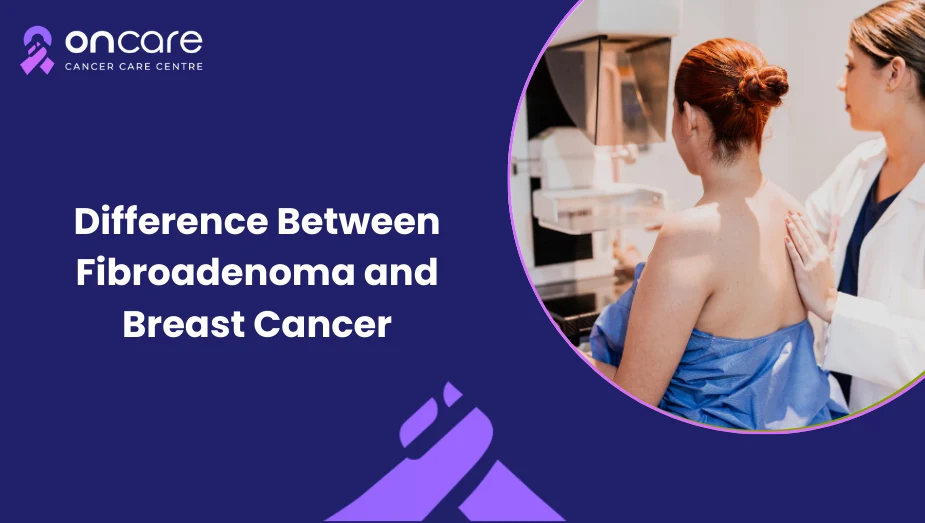
It can be scary to find a lump in your breast. Before they even see a doctor, most people think of breast cancer. It's normal to be scared, but the truth is that a lot of breast lumps aren't dangerous. Fibroadenoma is one of the most common lumps in the breast that isn't cancerous. It is easy to mix up fibroadenoma and breast cancer because both can look like lumps. Knowing the difference between fibroadenoma and breast cancer can help ease your mind and make sure you get the right medical care on time.
In this article, we'll use very simple and easy-to-understand language to explain how these two conditions are different.
Getting to Know Fibroadenoma
A fibroadenoma is a lump in the breast that is not cancerous. A lot of people have it, especially young women. These lumps are made of fibrous and glandular tissue, and they won't kill you. A lot of people with fibroadenoma don't have any major health problems.
How Fibroadenoma Feels
A fibroadenoma usually feels round, smooth, and firm, but not hard. When you touch it, it often feels like rubber. One important thing about it is that it moves easily under the skin when you push on it.
How Fibroadenoma Grows or Changes
Most of the time, fibroadenomas grow very slowly or stay the same size for years. Some may get a little bigger when you are pregnant or your hormones change, and they may get smaller over time as your hormone levels change.
Who Is More Likely to Have Fibroadenoma
Women between the ages of 15 and 35 are most likely to get fibroadenoma. It is closely connected to hormones and happens more often during the years when a woman can have children.
Understanding Breast Cancer
Breast cancer is a serious illness in which cells that shouldn't be there grow out of control in the breast tissue. If not treated early, breast cancer can spread to nearby lymph nodes and other organs. This is not the case with fibroadenoma.
How Breast Cancer Lumps Feel
Breast cancer lumps usually feel hard and solid. They often have shapes that aren't straight and edges that aren't even. These lumps usually don't move around easily under the skin and feel like they're stuck in one place.
How Breast Cancer Changes Over Time
Lumps of breast cancer usually grow slowly but steadily. They don't go away on their own. Other symptoms, such as changes in the skin or nipples, may show up over time.
Who Has a Higher Chance of Getting Breast Cancer
The chance of getting breast cancer goes up as you get older, especially after 40. Family history, genetics, lifestyle, and hormones can also raise the risk, but it can happen at any age.
Difference Between Fibroadenoma and Breast Cancer Lumps
Understanding the difference between fibroadenoma and breast cancer lumps can help reduce fear and confusion when a breast lump is discovered. Although both conditions may appear as a lump in the breast, they behave very differently. Paying attention to how the lump feels, how it grows, and whether there are changes in the skin or nipple can provide important clues. However, only a doctor can confirm the exact cause.
Difference in How the Lump Feels
The way the lump feels is one of the main things that sets fibroadenoma and breast cancer apart. Fibroadenoma lumps feel smooth, round, and movable. Breast cancer lumps feel hard, uneven, and stuck.
Fibroadenomas usually have clear edges, but cancer lumps often blend in with the tissue around them. Pain is not a reliable sign because both can be painless.
Difference in Behavior and Growth
Fibroadenomas usually grow very slowly or not at all. Some may even get smaller on their own. On the other hand, lumps of breast cancer tend to get bigger over time.
If you have a lump that keeps getting bigger or doesn't go away, you should see a doctor.
Difference in Skin and Nipple Changes
Fibroadenoma typically does not induce alterations in the skin or nipples. There is no discharge from the nipple, and the skin looks normal.
Breast cancer can make the skin thick, red, dimpled, or have a texture that looks like an orange peel. You might also notice that your nipples are pulling in or that blood is coming out.
Diagnosis and Treatment Differences
Both conditions necessitate medical assessment. Doctors may use a physical exam, an ultrasound, a mammogram, or a biopsy to make sure the diagnosis is correct.
Fibroadenoma usually doesn't need treatment, but it may need to be watched. Breast cancer always needs treatment, which may include surgery, chemotherapy, radiation, or targeted therapy, depending on how far along it is.
Why Early Medical Checkups Are Important
A doctor is the only one who can tell for sure if a lump is a fibroadenoma or breast cancer, no matter how harmless it feels. Early diagnosis leads to better outcomes and gives people peace of mind.
Regular breast self-exams and seeing a doctor on time are very important for breast health.
Consult Today
The lump feels, grows, and affects the breast differently in fibroadenoma and breast cancer. Fibroadenoma lumps are usually smooth, movable, and not dangerous. Breast cancer lumps, on the other hand, are often hard, fixed, and growing. It's less scary to know these things, but you should always see a doctor.
Oncare Cancer Hospital has experienced specialists, modern technology, and caring treatment that focuses on early detection and the best possible recovery. They also have advanced imaging and expert breast cancer care.
Frequently Asked Questions
Fibroadenoma is not cancer and very rarely becomes breast cancer.
No, most lumps in the breast that are cancerous don't hurt, especially in the early stages.
Most fibroadenomas don't need surgery unless they get bigger or hurt.
Yes, a doctor should always check any new or persistent lump in the breast.
Book an Appointment
Related Blogs
What do Breast Cancer Lumps Feel Like?
Breast cancer lumps often feel hard, fixed, and painless. Learn how cancerous breast lumps feel, how they differ from normal lumps, and when to see a doctor.
What Causes Pimples on the Breast? Is It Breast Cancer?
Pimples on the breast are usually harmless and caused by sweat, hormones, or clogged pores. Learn common causes, differences from cancer signs, and when to see a doctor.
Breast Self-Examination: Step-by-Step Guide for Early Detection
Discover more about Breast Self-Examination and its Step-by-Step Guide for Early Detection for breast cancer and why early detection matters and its limitations!
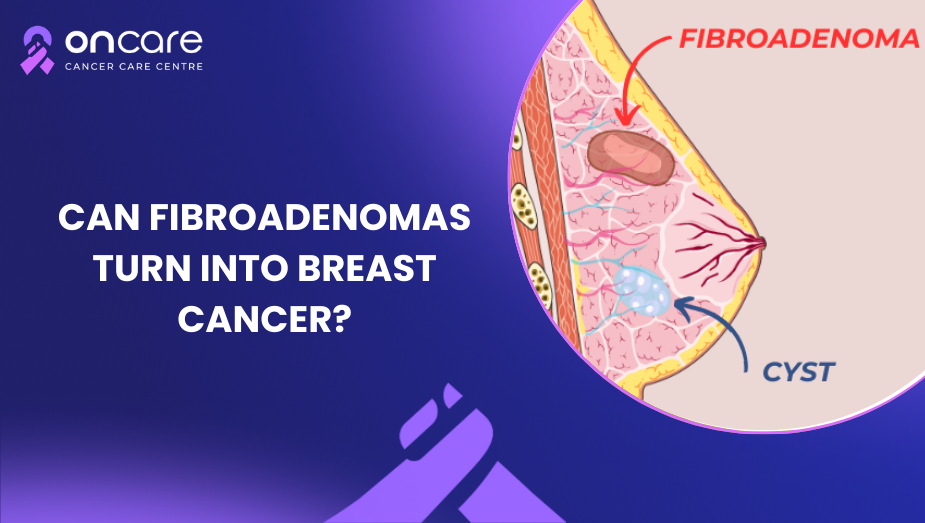
Can Fibroadenomas Turn Into Breast Cancer?
Can fibroadenomas turn into breast cancer? Learn real risks, warning signs, follow-up needs, and when treatment is required. Book expert consultation at Oncare.