Table of Contents
Treatment-Induced Early Menopause: Managing Sudden Hormonal Changes

By Dr. Gajendra Kumar Himanshu


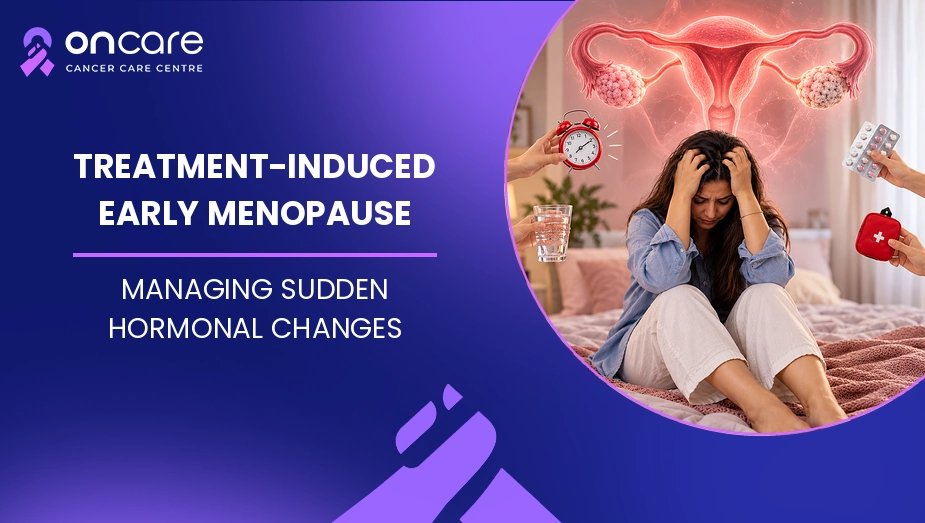
Treatment-induced early menopause can happen when cancer treatment affects the ovaries and causes a sudden drop in hormones such as estrogen. Chemotherapy, radiation therapy involving the pelvis, some hormone treatments, and surgery to remove the ovaries can lead to early or premature menopause. Common changes include hot flashes, night sweats, irregular or absent periods, vaginal dryness, sleep problems, mood changes, and fertility concerns. In some women, these changes are temporary, while in others they can be permanent.
In this blog, we’ll discuss why cancer therapy can trigger early menopause, what hormonal changes may resemble, and practical techniques to manage these symptoms. We will also cover fertility, bone health, sexual health and why it is so vital to chat with your cancer care team before taking any hormone-based treatment.
What Is Treatment-Induced Early Menopause?
Menopause is a natural process in which the ovaries gradually cease producing reproductive hormones and the monthly cycles cease. If this change occurs earlier than anticipated as part of cancer treatment, it is known as treatment-induced early menopause.
Cancer therapy can impact the ovaries in the following ways: Some chemotherapy drugs can harm eggs and cells in the ovaries. Radiation to the pelvis may potentially disrupt ovarian function. Hormone therapy can decrease hormone levels in some instances, but surgical removal of both ovaries induces menopause instantly.
You can learn more about cancer treatment side effects to understand how different treatments may affect the body.
Why Does Cancer Treatment Cause Sudden Hormonal Changes?
The ovaries make hormones that assist control menstrual cycles, fertility, bone health and other physiological processes. Estrogen levels can drop rapidly when therapy suppresses ovarian function.
This quick change can feel different from natural menopause because the body doesn’t always have the chance to adjust slowly. Symptoms may occur during treatment or soon after. But each woman’s experience is different, and sometimes ovarian function may be restored after treatment.
Treatments That May Cause Early Menopause
Different cancer treatments affect the ovaries in different ways. The table below gives a simple idea of how each treatment may change ovarian function.
Cancer treatment | Possible effect on ovarian function |
|---|---|
Chemotherapy | Can damage ovarian cells and reduce hormone production |
Pelvic radiation | Can affect the ovaries and their ability to function |
Hormone therapy | May lower or block certain hormones |
Surgery to remove ovaries | Causes immediate and permanent menopause |
Combination treatment | May increase the chance of long-term ovarian damage |
The risk depends on factors such as age, treatment type, treatment dose, and whether more than one type of treatment is used.
Common Symptoms of Treatment-Induced Menopause
Symptoms can appear suddenly and may affect daily life. Some women experience only a few symptoms, while others may have several at the same time.
Common symptoms include:
- Hot flashes and night sweats
- Irregular or stopped periods
- Vaginal dryness or irritation
- Sleep problems
- Mood changes or increased anxiety
- Lower sexual desire
- Pain or discomfort during sex
- Difficulty concentrating
- Fertility changes
Hot flashes may happen during the day or at night and can sometimes disturb sleep. Lower estrogen levels can also cause vaginal tissues to become thinner and drier, which may make sexual activity uncomfortable.
How Can You Manage Sudden Hormonal Changes?
Managing early menopause usually involves treating the symptoms while also considering the type of cancer and its treatment. There is no single approach that works for everyone.
Manage Hot Flashes and Night Sweats
Keeping the body cool may help reduce hot flashes. Wearing light clothing, using a fan, and avoiding personal triggers such as very hot drinks or spicy foods may be useful for some people. If symptoms are severe, your doctor may discuss medicines or other treatments that can help. Do not start a hormone medicine or supplement on your own.
Manage Vaginal Dryness
Vaginal dryness is common when estrogen levels fall. Water-based or other recommended lubricants can make sexual activity more comfortable. Vaginal moisturisers may also help with ongoing dryness. Some women may be offered local hormonal treatment, but this is not suitable for everyone. The decision should take into account the type of cancer and whether the cancer is hormone-sensitive.
Protecting Bone Health
Estrogen helps maintain bone strength. When menopause occurs early, reduced estrogen levels can contribute to bone loss over time. Some cancer treatments can also increase the risk of osteoporosis.
Your doctor may recommend appropriate exercise, adequate calcium and vitamin D intake, and bone health monitoring based on your individual risk.
Weight-bearing activities such as walking and strength exercises can help support bone and muscle health when they are safe for you. Ask your doctor before starting a new exercise routine, particularly during or soon after cancer treatment.
Fertility After Treatment-Induced Menopause
One of the most difficult concerns for younger women can be the possibility of infertility. Cancer treatment can reduce the number of healthy eggs or affect ovarian function. However, periods stopping does not always mean that ovarian function is permanently lost. Some women may have their periods return after treatment.
If having children in the future is important to you, discuss fertility with your cancer care team as early as possible. Fertility specialists can explain whether fertility testing or preservation options may be appropriate.
It is also important to remember that pregnancy may still be possible in some women even when periods have stopped temporarily. Therefore, contraception may still be needed during and after certain cancer treatments.
Can Hormone Therapy Be Used?
Menopausal hormone therapy can help some women with symptoms such as hot flashes and vaginal dryness. However, it is not appropriate for everyone who has had cancer.
For example, women with certain breast, endometrial, or ovarian cancers may be advised not to use hormone therapy because hormones can affect some hormone-sensitive cancers. Other non-hormonal options may be considered instead.
The safest option depends on your cancer type, treatment history, age, symptoms, and overall health. Always discuss hormone treatment with your oncologist and other appropriate healthcare professionals before starting it.
Emotional Changes and Support
Sudden menopause during cancer treatment can be emotionally difficult. Changes in fertility, body image, sexuality, sleep, and mood can affect confidence and relationships.
Talking openly with your partner, oncologist, gynaecologist, counsellor, or support group can help. You do not have to manage these changes alone.
If you are currently going through cancer treatment, our cancer care services can help you understand the different areas of support that may be part of your care.
If you want to learn more about cancer treatment, then you can visit the official website of the National Cancer Institute.
Consult Today
Treatment-induced early menopause can bring sudden physical and emotional changes, but many symptoms can be managed with the right medical support. Your treatment plan should always consider both cancer control and your quality of life.
At Oncare Cancer Hospital, the cancer care team can help patients understand treatment-related hormonal changes and discuss suitable ways to manage symptoms based on their individual cancer and treatment history.
Disclaimer
This information is for educational purposes only and does not constitute medical advice, diagnosis, or treatment. Always discuss decisions about hormone therapy, fertility or any menopausal symptom with a certified cancer healthcare provider.





Frequently Asked Questions
Yes, some chemotherapy medicines can affect ovarian function and may cause periods to become irregular or stop. The effect can be temporary or permanent.
No, some women regain ovarian function after treatment, while others experience permanent menopause. Age and the type and dose of treatment can influence the outcome.
Yes, reduced ovarian function can affect fertility. However, the effect varies from person to person, so fertility should be discussed with your cancer care team or a fertility specialist.
Not everyone can safely take hormone therapy after cancer treatment. The decision depends on the type of cancer, treatment history, and individual health factors, so it should only be considered with guidance from your healthcare team.
Written and Verified by:
Dr. Gajendra Kumar Himanshu Exp: 10 Yr
Medical Officer
Book an Appointment
Related Blogs

Chemotherapy-Induced Peripheral Neuropathy: Managing Numbness and Tingling
Learn about chemotherapy-induced neuropathy, including numbness, nerve pain, and weakness. Know simple ways to manage symptoms with Oncare Cancer Hospital.

Coping with Chemotherapy-Induced Mouth Sores
Discover more about chemotherapy-induced mouth sores in cancer patients, why mouth sores happen during chemotherapy, and common symptoms of chemotherapy!
Can You Work During Chemotherapy? What You Need to Know
Learn more about how to work during chemo, how chemo affects patients, tips for balancing working during chemo, and signs you can’t continue working during chemo!