Table of Contents
Which Cancer Treatment Is Right for You? Doctors’ Advice

By Raveena M Prakash


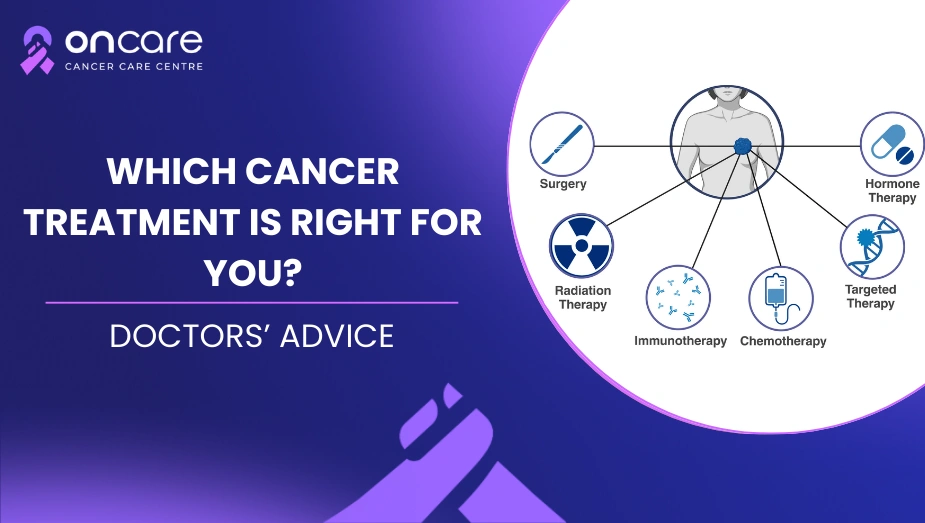
A cancer diagnosis changes everything in an instant. Along with the emotional impact comes an urgent and overwhelming question: which treatment is right for me? While the answer is rarely simple. Because cancer is not a simple disease, and no two patients are exactly alike. The right cancer treatment majorly depends on the type of cancer, its stage, genetic characteristics, overall health, and personal priorities. Modern oncology offers more options than ever before, and that’s a good thing. It also means that treatment decisions can feel more complicated.
In this article, we’ll discover more about the types of cancer treatments and advice doctors commonly use to give patients more informed decisions about their treatment choices.
Understanding your cancer diagnosis
Before deciding your cancer treatment, your medical team focuses on gathering detailed information about your types of cancer.
This would typically involves:
- The type of cancer
- The stage (how far it has spread)
- The grade (how aggressive the cells appear)
- Biomarker and genetic testing results
- Patient’s overall health and medical history
Many experts emphasize that cancer treatment decisions should never be rushed without understanding these factors. A precise cancer diagnosis allows for a personalized cancer treatment plan, and personalization is found vital in modern cancer care.
Important cancer treatments for patients
Cancer treatment varies depending on the type, stage, and individual health factors of the patients. Many experts use a range of cancer therapies to target cancer effectively, relieve signs and symptoms, and improve the quality of life.
1. Surgery: Removing the Tumor
Surgery is often considered as the first line of cancer treatment for solid tumors that are confined to one area.
The cancer treatment goal is simple and effective, these may include:
- As the primary cancer treatment for early stage cancers
- To remove the part of a tumor to relieve symptoms
In the majority of cancer cases, surgeries are often performed in combination with chemotherapy or radiotherapy treatment.
Doctor’s perspective on this:
When an imaging test shows that the cancer has not spread, surgery can offer the best chance of a cure. However, surgery may not be considered suitable if the cancer has metastasized or if a patient has other health concerns that tend to increase surgical risks in patients.
2. Chemotherapy
Chemotherapy uses several cancer medications that flow through the bloodstream to destroy rapidly growing cancer cells. Because it works systemically throughout the body, chemotherapy is highly useful for cancers that have spread or are likely to spread in the patient’s body.
These may be given:
- Before surgery
- After surgery
- As the main cancer treatment for certain blood cancers
- To relieve symptoms in advanced cancer stages
Key notes
Chemotherapy has a bad reputation for causing major side effects in cancer patients. While good cancer supportive care has improved significantly. Many patients manage treatments better than they expect. Still, fatigue, nausea, hair loss, and lowered immune systems are commonly found in these patients. Doctors carefully weigh the benefits against potential side effects and design drug combinations for each patient’s condition.
3. Radiation therapy
Radiation therapy uses high-energy beams to target and destroy cancer cells in a specific area. Unlike chemotherapy, radiation therapy treatment does not treat the whole body.
Radiation therapy may be used:
- After surgery, radiation therapy is used to eliminate microscopic cancer cells
- In some cases, radiation therapy is used instead of surgeries
- To relieve pain or symptoms that caused by tumors
4. Immunotherapy
Immunotherapy works by stimulating the immune system to recognize and attack cancer cells. These treatments won’t directly kill the cancer cells like chemotherapy, it enhances your body’s natural defenses. The treatment has transformed outcomes for advanced cancers and continues to expand into new cancer types.
5. Targeted therapy
Targeted therapy focuses on specific molecules or genetic mutations that allow cancer cells to grow. Unlike chemotherapy, it does not attack rapidly growing cancer cells, while only those with certain characteristics. To understand whether these treatments suit the patient’s eligibility, doctors perform some genetic or molecular testing on the tumor.
6. Hormone therapy
Some cancers mainly rely on hormones to grow. Hormone therapy works by blocking the patient’s ability to produce these hormones or preventing cancer cells from using them. The treatment is often used long-term to reduce the risk of recurrence.
Combination therapy: A common treatment approach
Many cancer patients receive more than one type of cancer treatment for the recovery of their disease.
For example:
- Surgery followed by chemotherapy
- Chemotherapy combined with radiation
- Targeted therapy along with hormone therapy
Many experts suggest getting personalized treatment plans to maximize effectiveness while balancing safety and tolerability. The sequence and timing of various cancer therapies are carefully planned.
Factors that influence the right choice
When recommending a cancer treatment, your healthcare provider might consider:
Stage of cancer
Early-stage cancers may be curable with local treatments such as surgery or radiation therapy. Advanced stage cancers often require systemic cancer treatments.
Genetic and molecular features
Cancer testing can reveal the genetic mutations or markers that open the door to targeted or immunotherapy treatment options.
Overall health conditions
Patients with preexisting heart disease, diabetes, lung conditions, or weakened immune system, might affect various treatment outcomes.
Age and functional status
Biological age and organ functional status matter more than chronological age. Some patients tend to tolerate aggressive cancer treatment well, while young cancer patients and other cancer patients need more adjustments.
Personal goals and treatment preferences
Some cancer patients prioritise aggressive cancer treatment focused at cure. Others might focus on the quality of life and symptom relief. There is no right answer for the best cancer treatments, only what aligns the best of your values.
Cancer treatment decisions: What works for you
The right cancer treatment mainly depends on various factors, while advances in cancer medicine and treatments have created more hope than ever. Personalized cancer treatments are now considered the standard, not the exception.
The right cancer treatment is one that balances the medical effectiveness with your personal goals, health, and values. While you are not alone in the process and have the guidance of experienced cancer doctors, you can make more informed decisions that feel more informed, thoughtful, and rightful about cancer treatments for you.
Consult Today
Choosing the right cancer treatment is a deeply personal and overwhelming decision in anyone’s life. While medical science often provides a wide range of treatment options, including surgery, chemotherapy, and targeted therapies, the best treatment plan is one that aligns with your specific cancer diagnosis, overall health, and personal goals.
At Oncare, we offer premium-quality cancer treatments, including advanced cancer surgeries, at an affordable price range with an experienced cancer specialist consultation.
If you or any loved ones of yours are diagnosed with cancer, then visit Oncare Cancer Hospital and book an appointment with our experienced cancer specialist today! Get an estimated cost of your cancer treatment today!
Frequently Asked Questions
The main cancer treatments are surgery, chemotherapy, radiation therapy, targeted therapy, and hormone therapy. Many doctors help to determine which types of treatments are best based on your type of cancer.
Yes, you can discuss various treatment options with your doctor and choose a treatment plan that fits your type, lifestyle, goals and treatment preferences.
Most of the cancer treatments have side effects, but they vary by type of your cancer. Your cancer doctor will explain what to expect and how to manage them.
Book an Appointment
Related Blogs
Stage 4 Lung Cancer Treatment: Palliative Care and Quality of Life Tips
Learn more about Stage 4 lung cancer and its symptoms, treatments, role of palliative care, and tips for improving the quality of life and comfort for patients
Stage 1 Lung Cancer Treatment Plan: What Patients Should Know
Discover more about stage 1 lung cancer and its treatment plans, lifestyle changes that support recovery, and the importance of emotional and psychological impact.
Stage 4 Breast Cancer Treatment Options: What Works Best Today
Discover more about breast cancer and stage 4 breast cancer and understand the breast cancer type and how to choose the treatment options and what works best today!

Cancer Treatment During Winter Smog: Risks, Precautions, and Medical Advice
Discover more about cancer treatment during the winter and smog; risks and precautions for a patient and medical advice are needed to be considered during the treatment.