Table of Contents
Breast Self-Examination: Step-by-Step Guide for Early Detection

By Raveena M Prakash


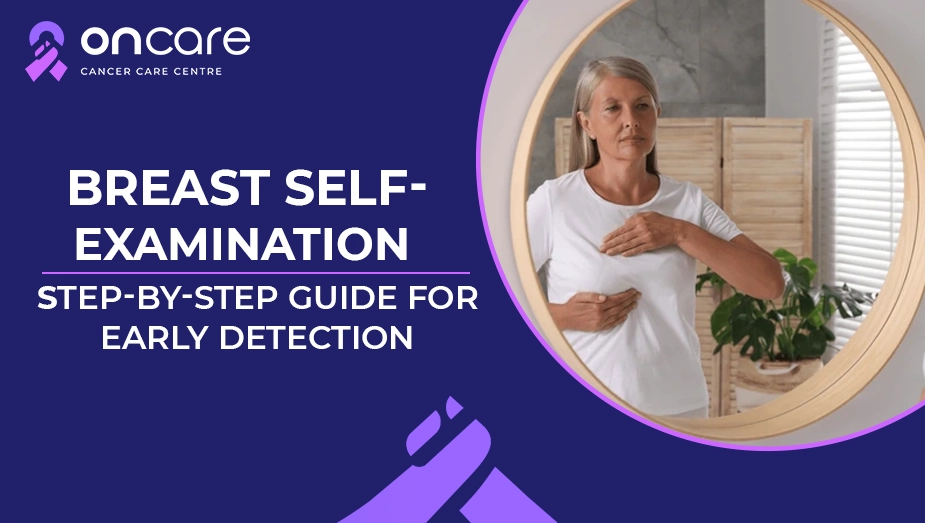
Breast health is an essential part of overall wellness, especially in women’s lives. Performing breast self-examinations is a simple, non-invasive method that helps individuals become familiar with their breasts and understand any major changes early in their lives. These are not considered as a replacement for any medical screening test to diagnose breast cancer in its early stages. These are regular self examinations that support early cancer awareness and encourage timely medical consultation when something feels off or unusual with the body.
In this article, we’ll discover more about breast self examination and why early detection matters and also limitations of performing breast self examination!
Understanding Breast Self- Examination
A breast self-examination is a personal health checkup that involves physically evaluating the breasts to identify any sudden changes happening to the breasts, be it in their appearance, texture, or sensitivity. The main goal is not only to diagnose conditions but also to notice some differences happening in the body. As we all know, everyone’s body is different, and knowing what your type is helps you to identify any changes that might need immediate medical attention.
Breast tissue changes naturally due to age, normal fluctuations, pregnancy, or weight changes. Performing regular breast self-examinations helps to understand any normal changes for those that should be evaluated by healthcare providers.
Why early detection matters
Understanding any sudden changes happening to your breasts and detecting their changes often leads to more treatment options, better treatment outcomes, and less invasive medical interventions. Many breast conditions are highly treatable when understanding these symptoms at an early stage. This allows the person to get timely and effective care.
Although breast cancer is more common in adults, developing cancer awareness at a young age encourages lifelong healthy habits and proactive health management. Early detection empowers individuals to seek medical advice immediately, reducing delays in diagnosis and improving overall health treatment outcomes.
Who needs to perform Self breast examination
Performing self breast examinations are recommended for individuals of all ages, especially those who:
- Women from a family history of breast cancer or breast- related conditions
- Experience hormonal changes
- Lifestyle risk factors
- Proactive health approach
Healthcare providers might suggest additional screenings based on age, medical history, or risk factors, but self-awareness remains valuable for everyone.
Best time to perform breast self examination?
As we all know, consistency is a key for effective self examinations. Performing these examinations at the same time in a month helps you to recognize any kinds of subtle changes.
Here’s the best time to perform breast self examinations, including:
- Menstruating women, practise self examination after 5-7 days after periods ends.
- For those who don’t menstruate, try to choose fixed monthly date
- Avoid performing breast self examination when breasts are tender or swollen, if possible
Always choose a calm and comfortable environment while performing your self examination.
Step-by-Step Guide for Early Detection
Step 1: Visual inspection in front of a mirror
First of all, stand in front of the mirror with good lighting. Try to keep your shoulders straight and arms relaxed at your sides.
Observe your breasts carefully and look for:
- Changes in size or shape
- Differences in symmetry
- Skin changes such as redness, puckering or dimpling
- Changes in nipple position
Next time, lift your arms overhead and observe again. Then place your hands on your hips and gently tighten your chest muscles to notice any kinds of changes in its contour.
Step 2: Physical Examination while standing or sitting
Examine your breasts while standing or sitting. Many experts suggest doing this step during taking a shower because wet skin allows fingers to move smoothly.
- Always move fingers in a small circular motion
- Apply light pressure on the surface tissue, medium pressure should be given for deeper tissue, and apply a firm pressure for tissue closest to the chest wall.
- Try to follow a consistent pattern including circular, vertical lines, or wedge shaped movements.
- Cover the entire breast area with your hands, from the collar bone to the under-breast and from the center to the chest to the underarm.
Step 3: Physical examination while lying down
Now lie a flat on your back and one arm behind your head. This position helps to spread the breast tissue evenly across the chest.
Then follow these steps:
- Use the opposite hand to examine the breast
- Repeat the same circular motion or vertical movements
- Ensure you check the underarm area
- Switch sides and repeat the process
The position often makes it easier to feel deeper changes.
Step 4: Nipple examination
In this step, gently squeeze the each nipple and check for:
- Unusual discharge
- Pain or tenderness
- Changes in the direction or appearance
Any kinds of unexpected discharge and constant discomfort should be discussed with a healthcare professional immediately.
Limitations of Breast Self- Examination
Breast self-examination is beneficial for understanding any changes happening in the breast, but still it has limitations. Some changes may not be easily detectable, and not all breast conditions will be discovered through performing only breast self-examination.
That’s why healthcare providers recommend breast self examination with:
- Clinical breast examinations
- Imaging tests
- Regular medical checkups and screenings
When to consult a doctor
If you start to notice any sudden changes that continue for more than a few weeks, or if something feels significantly different than usual, then schedule an appointment with a doctor. An immediate medical evaluation can help to rule out concerns or allow early cancer treatment if needed.
Consult Today
Breast self-examination is a simple yet powerful tool to diagnose breast cancer and is often used for early diagnosis. By understanding your body and staying aware of the changes happening in the body, you can take an active role in improving your breast health. Performing breast self-examinations is not a substitute for professional cancer care; they serve as an important step in early detection and prevention.
At Oncare, we offer premium-quality cancer treatments, including advanced cancer surgeries, at an affordable price range with an experienced cancer specialist consultation.
If you or any loved ones of yours are diagnosed with cancer, then visit Oncare Cancer Center and book an appointment with our experienced cancer specialist today. Get an estimated cost of your cancer treatment today!
Frequently Asked Questions
A breast self examination is a step-by-step way to identify your breasts for any unusual lump or growth in your breasts.
Normal breasts Lumps often feel smooth and movable (such as cysts, fibroadenomas, and fatty lipomas) or are part of natural, hormonally driven lumpy/ropey textures also known as fibrocystic changes, which fluctuate with your cycle.
If you notice any kinds of changes that continue for more than 2 weeks, then consider consulting a healthcare professional immediately.
Book an Appointment
Related Blogs

Can Men Get Breast Cancer? Causes, Symptoms, and Treatment
Discover more about how men get breast cancer, what the causes and risk factors of breast cancer in men are, how breast cancer is diagnosed, and its symptoms and treatments!

Breast Cancer Lumpectomy vs Mastectomy: What’s the Difference?
Discover more about breast cancer surgeries, understanding lumpectomy and mastectomy and their advantages, challenges, and their emotional and psychological impact.

Breast Cancer Last Stage Symptoms and How to Manage Them
Learn about breast cancer last stage symptoms in simple words. Understand final stage changes, what to expect, and how to support your loved one with the right care.

First Stage Breast Cancer Symptoms: Don’t Miss These Early Clues
Discover first stage breast cancer symptoms, spot early changes in your breasts, and get timely care for better treatment and recovery.