Table of Contents
Baxter Pump for Chemotherapy: How It Helps Continuous Infusion

By Raveena M Prakash


Chemotherapy treatments have evolved significantly over the years. Modern cancer care mainly focuses not only on effectiveness but also on patient comfort, safety, comfort, and quality of life. One important advancement in this area is the use of the Baxter pump for chemotherapy, especially for continuous infusion therapy. Many chemotherapy drugs work best when delivered slowly over time instead of being given as a single dose.
In this article, we’ll discover more Baxter pumps for chemotherapy and how it helps with continuous infusion in cancer patients.
What is Baxter pump?
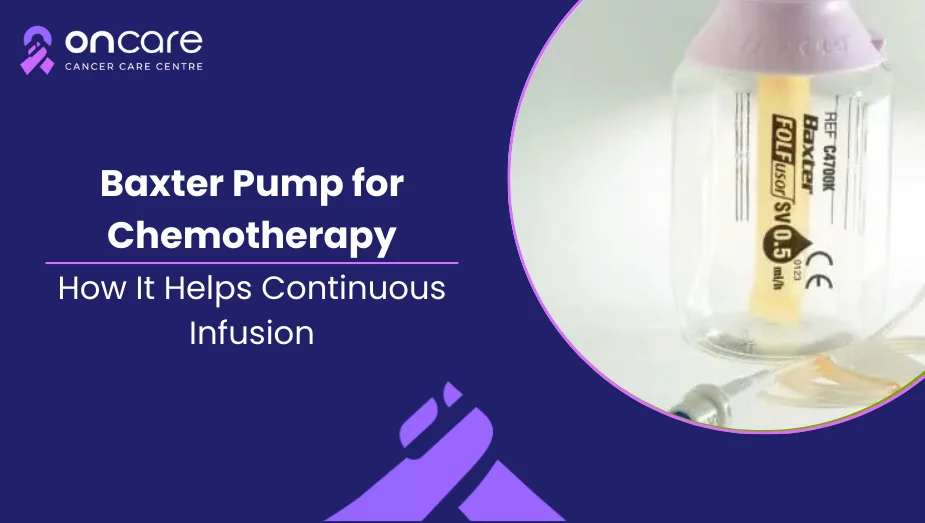
A Baxter pump, also known as a Baxter Elastomeric infusion pump. This equipment is a small, portable device used to deliver medications continuously into the bloodstream.
It consists of:
- A soft, balloon-like reservoir that holds the chemotherapy drug
- Tubing connected to an IV line, PICC line, or chemo port
- A flow regulator that controls the speed of infusion
Unlike any other electronic infusion pump, the pump does not require batteries or electricity. The elastic pressure from the reservoir pushes the medication at a fixed, preset rate.
What is Continuous Infusion Chemotherapy
A continuous infusion of chemotherapy simply means giving cancer drugs slowly over several hours and/or days instead of all at once. This treatment approach is often chosen when the drugs work better with constant exposure. A high-dose injection might cause several side effects.
The cancer responds well to prolonged cancer treatments. Chemotherapy drugs like 5-fluorouracil (5-Fu) are commonly administered through continuous infusion using a Baxter pump.
Why the baxter pump is important in chemotherapy
Buxter plays a vital role in making continuous infusion chemotherapy practical, precise, safe and patient-friendly in cancer patients.
Provides steady and controlled drug delivery
These pump releases chemotherapy medication at a constant rate, which ensures the following:
- The pump ensures stable drug levels in the bloodstream.
- Better effectiveness of time-dependent drugs
- These pumps help to reduce the risk of toxicity from sudden high doses.
These pump-controlled deliveries often help the oncologists optimize treatment outcomes.
Allows chemotherapy outside the Hospital
One of the biggest benefits of Baxter pumps is their mobility. After the pump, which is often connected in the hospital and/or clinic, patients can go home with the pump. Additionally, these can also help with:
- Sleep in their own bed
- Continue light daily activities
These pumps help to reduce the emotional and physical stress associated with long hospital stays.
Reduces the number of visits and admissions
A continuous infusion usually requires extended monitoring by a healthcare provider. Without a portable pump, patients would need to stay admitted.
While with this pump, these may include:
- Hospital stays are minimized.
- Outpatient chemotherapy becomes possible.
- A healthcare cost may be reduced
- Risk of hospital-acquired infection decreases
This makes cancer treatment more accessible and efficient.
Simple and user-friendly designs
The Baxter pump is designed for ease of use. These pumps operates silently, including:
- These pumps has no alarms or buttons
- These works automatically once connected
The patients do not need to adjust settings and manage the device actively, which helps to reduce anxiety and confusion in cancer patients.
Improves the treatment compliances
These pumps help to deliver the chemotherapy continuously without patient intervention.
Here’s how:
- Many experts suggests that the full prescribed dose is more likely to be completed
- Missed or delayed doses are avoided
- The treatment schedules are maintained accurately
This helps to improve the overall treatment compliance and effectiveness in patients.
Types of cancer treated using these pumps
These pumps are widely used in chemotherapy when drugs need to be delivered slowly and continuously for better treatment effectiveness. These are commonly included in treatment protocols for the following types of cancer.
These may include:
- Colorectal cancer
- Head and neck cancers
- Breast cancer
- Gastrointestinal cancers
- Pancreatic cancers
Doctors recommend this method when prolonged exposure to chemotherapy drugs improves cancer control.
What patients should know while using a baxter pump
These pumps are easy to manage when compared to traditional infusion methods. Cancer patients should follow some basic precautions.
These may include:
- Keep the pump at room temperature.
- Do not squeeze, puncture, or tamper with the reservoir.
- Try to avoid pulling or bending the tubing.
- Make sure to check the infusion site daily for redness, pain, or swelling.
If the pump starts to empty too early or too late, contact the healthcare provider. Patients are usually given clear instructions and emergency contact details before going home.
Is the baxter pump safe for chemotherapy
Safety is a top priority in delivering chemotherapy treatments to cancer patients. These pumps have been widely used and trusted in clinical settings to deliver continuous infusion chemotherapy. These treatments are often managed by trained professionals; they offer reliable and controlled drug delivery with built-in safeguards to protect patient well-being.
These may include:
- Pre- set infusion rates
- Medical grade materials
- Reduced human error compared to manual dosing
Healthcare providers carefully calculate the dosage and infusion time before prescribing the pump.
Benefits of using baxter pump for chemotherapy
Many traditional infusion methods often require prolonged hospital stays and close monitoring. These pumps offer a more flexible and patient-friendly alternative by delivering chemotherapy continuously at a controlled rate.
This approach improves comfort, reduces hospital codependency, and ensures consistent medication delivery.
Compared to hospital-based IV infusion, these often offers, including:
- Greater patient comfort
- Increased freedom and independence
- Less disruption to daily life
- Reduced need for hospital resources
- Consistent and accurate drug delivery
These advantages make it a preferred option for many chemotherapy regimens.
Consult Today
The Baxter pump for chemotherapy has transformed how the continuous infusion is delivered in cancer patients. By combining the precision, portability, and patient comfort, it allows the chemotherapy to be effective without being overwhelming. For patients who require continuous infusion, these pumps provide a balance between medical accuracy and everyday freedom for the patients.
At Oncare, we offer premium-quality cancer treatments, including advanced cancer surgeries, at an affordable price range with an experienced cancer specialist consultation.
If you or any loved ones of yours are diagnosed with cancer, then visit Oncare Cancer Hospital and book an appointment with our experienced cancer specialist today. Get an estimated cost of your cancer treatment today!
Frequently Asked Questions
A Baxter pump is used to deliver chemotherapy slowly and continuously over several hours or days, helping to maintain steady drug levels in the body.
Yes. These Baxter pumps are portable, allowing patients to continue treatment at home while carrying on normal daily activities.
No. The pump works automatically once connected and is generally comfortable and easy to manage, with minimal patient involvement required.
Book an Appointment
Related Blogs

Is Chemotherapy Treatment Painful for Breast Cancer?
Many people fear chemotherapy pain in breast cancer. Learn whether chemotherapy really hurts, what discomfort may occur, and how doctors manage pain during treatment.

Preventive Chemotherapy: A Step Toward Stopping Cancer Early
Discover more about preventive chemotherapy and who needs to undergo preventive chemotherapy, common types, and its benefits, challenges and considerations!

Types of Chemotherapy: Understanding Different Treatment Approaches
Discover more about types of chemotherapy, what the different chemotherapy approaches used in patients are, and how chemotherapy is delivered to cancer patients!

Best Foods to Eat During Chemotherapy and Radiation
Discover more about foods to eat during chemotherapy and radiation, why nutrition matters during these treatments, and what foods to limit during these treatments!